
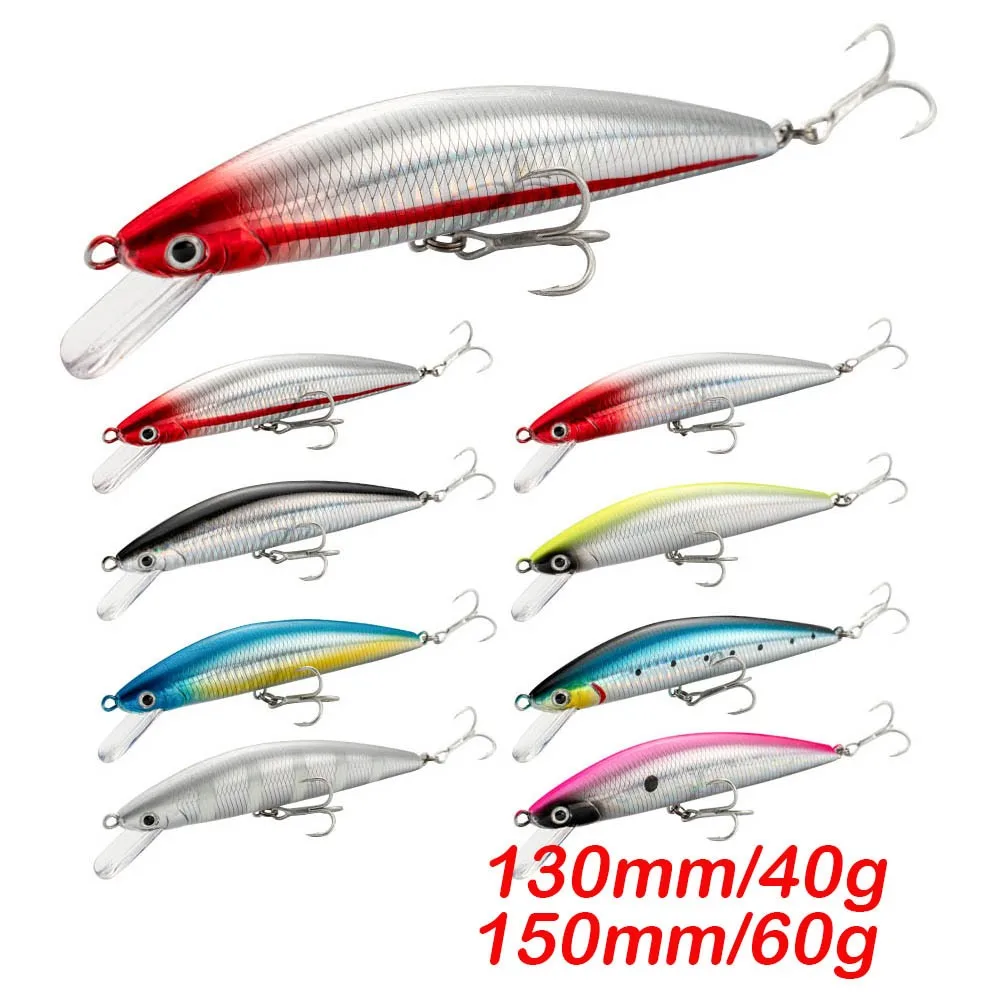
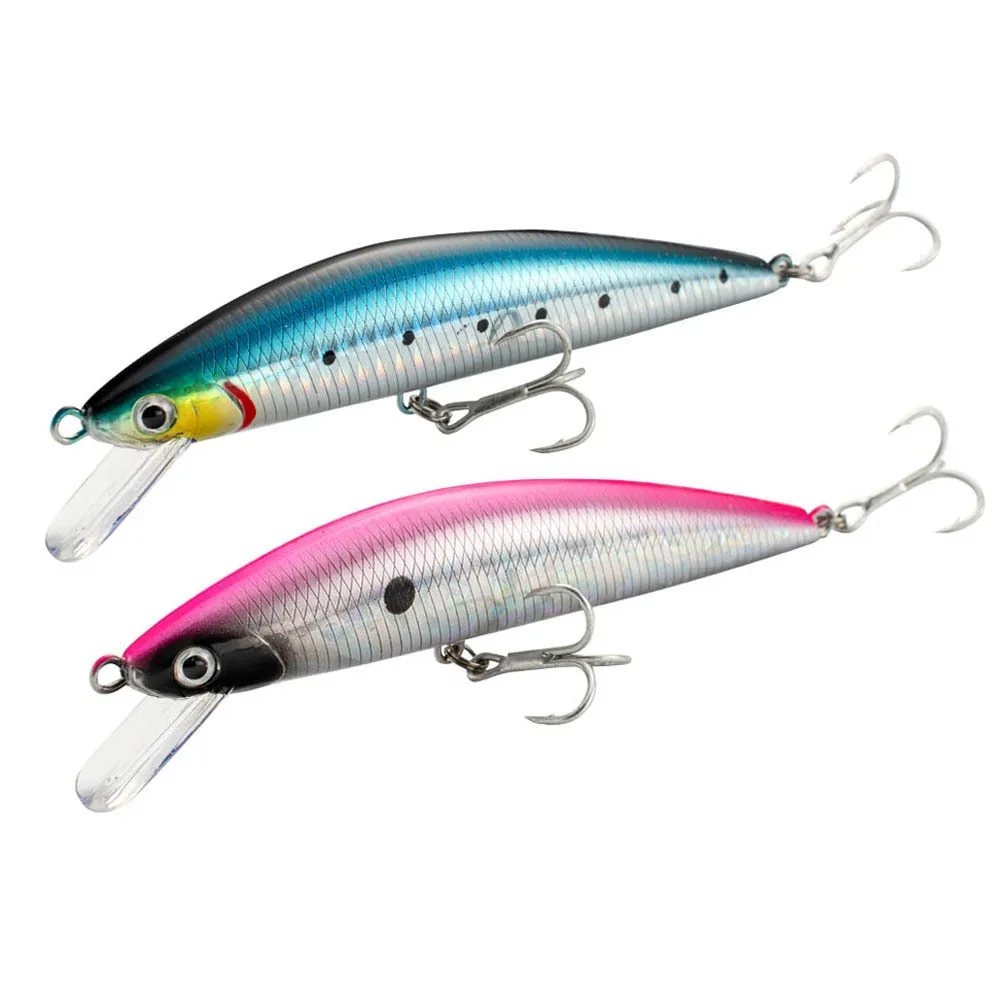
Some days you can see the fish busting bait just out of range, smug little splashes that feel like they are happening in another postcode. That is exactly when these sinking minnow fishing lures 40g 60g come into their own. They are heavy, streamlined hardbaits built to fly like a missile, sink with control and then wobble back like a wounded baitfish – the kind sea bass, tuna and mackerel simply cannot ignore.
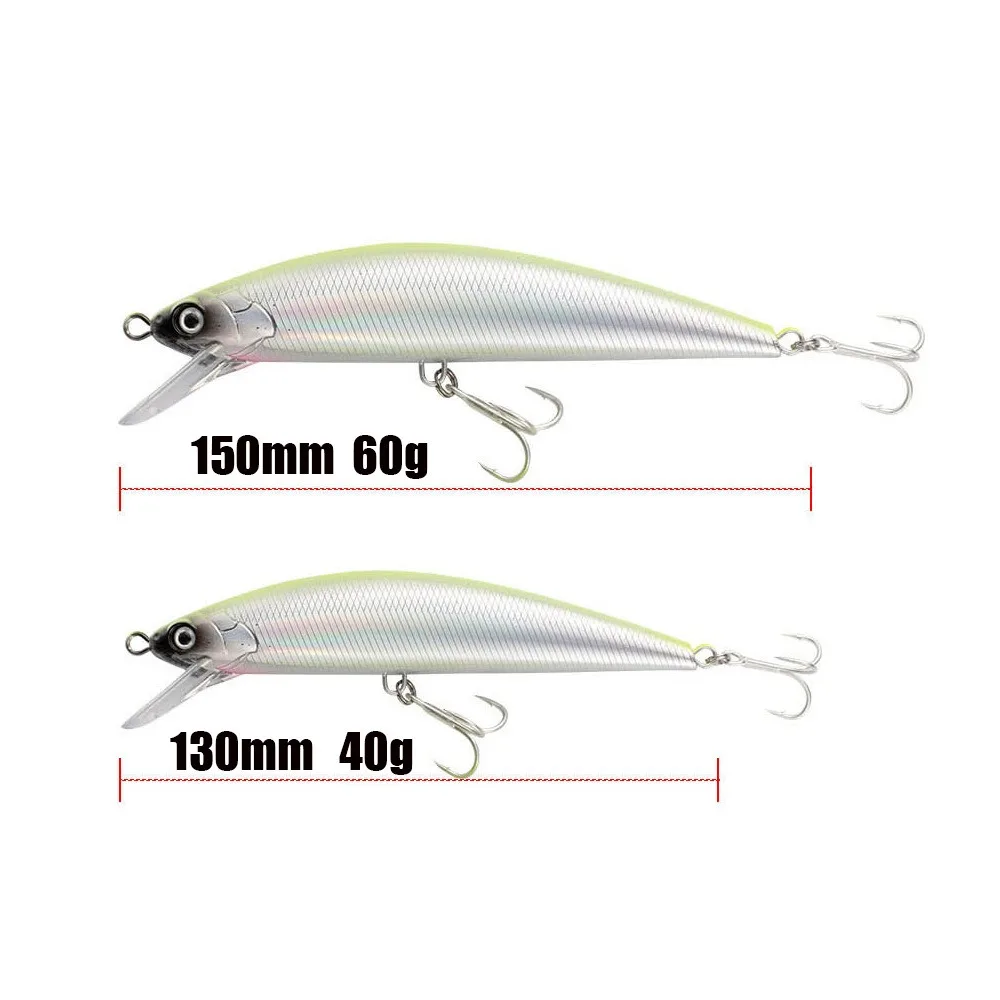
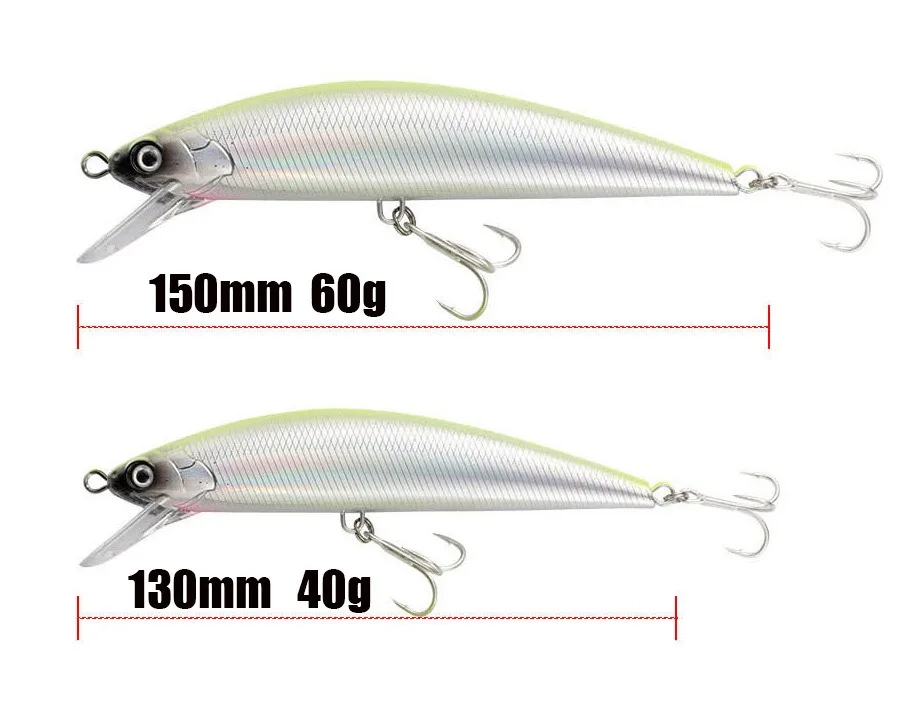
On sites that carry this family of lures you will see the same core story: 40 g and 60 g bodies, ABS hard-plastic construction, proper treble hooks and a long-cast, sinking minnow action designed for serious saltwater predators. They are sold in multi-piece packs so you can cover a few colours and weights, swap as conditions change and still have backups when a toothy customer steals one.
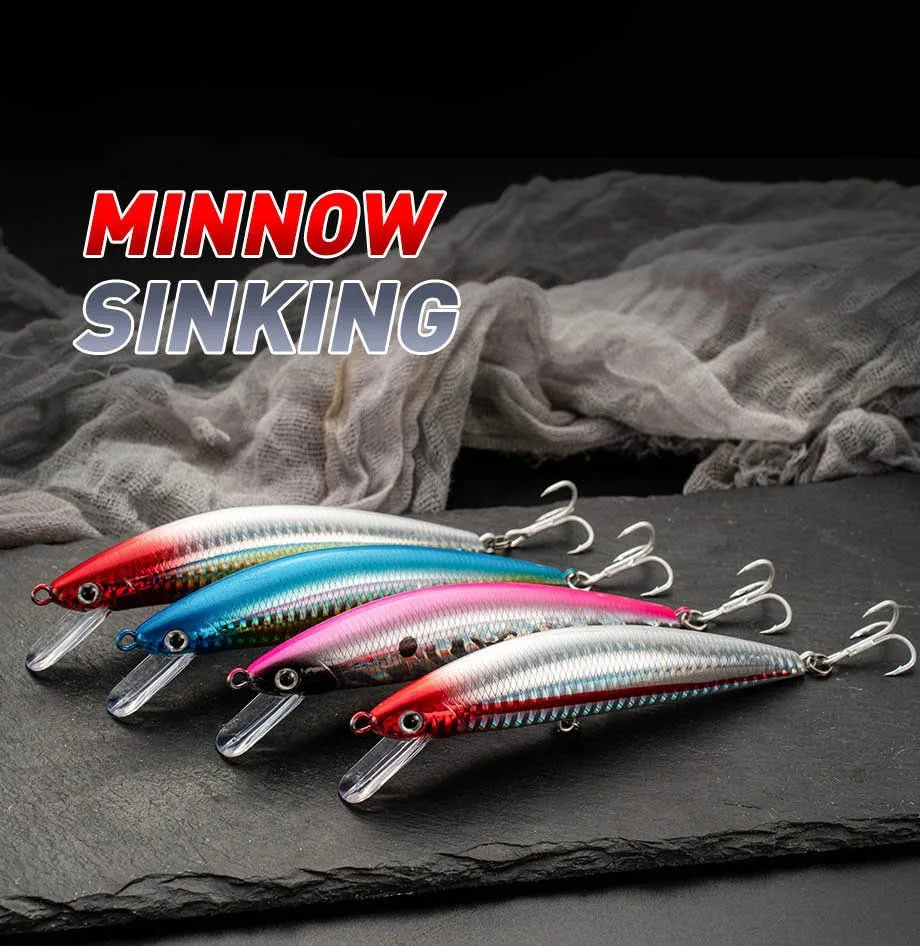
Why This Lure Works – Sinking Minnow Fishing Lures 40g 60g
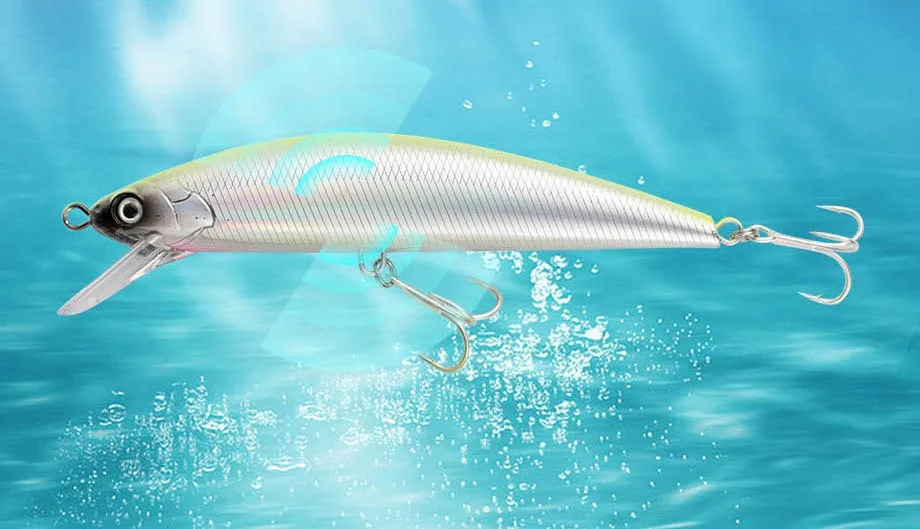
The secret sauce is the combination of weight and profile. At 40g and 60g these lures sit firmly in the “heavy minnow” space – similar to long-cast minnows and casting jigs that surf and rock anglers use when they need both distance and depth. That extra weight punches them out into wind and swell, and the slim minnow shape stops them from tumbling so they track straight through the air instead of cartwheeling and killing your distance.
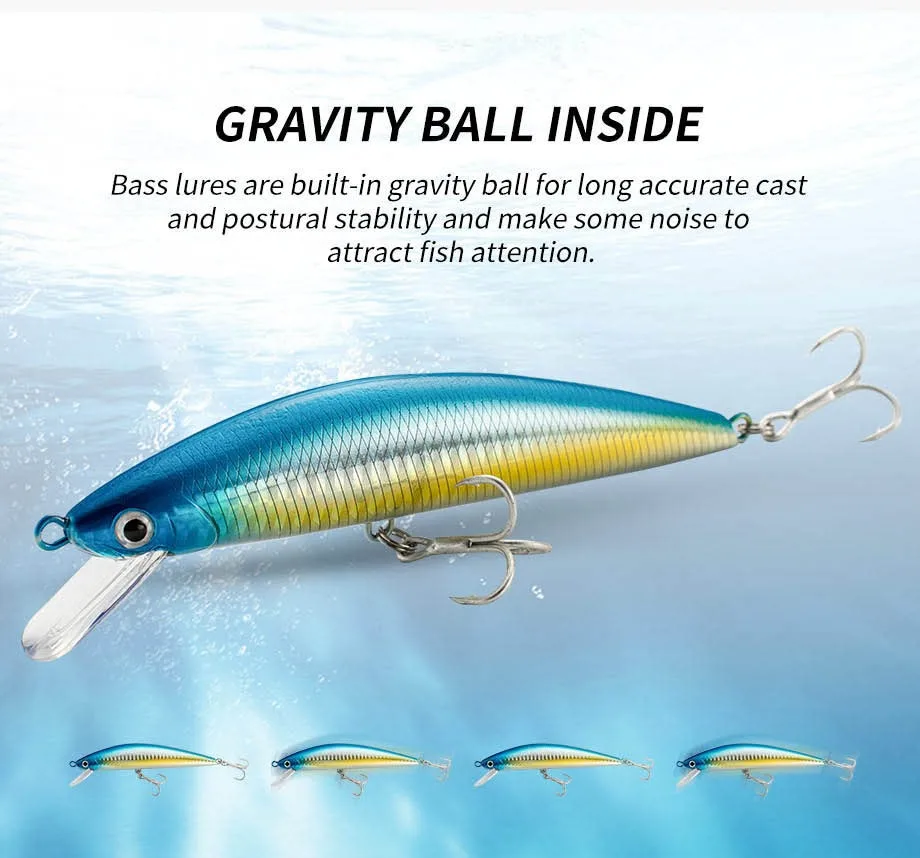
Once they splash down, the internal weight keeps them sinking nose-first with a tight wobble on the fall rather than spiralling uselessly. Think of a wounded sardine, mackerel or small mullet slowly dropping through the water column. A lot of popular heavy minnows and metal casting jigs are designed exactly this way – dense, compact and flashy – because pelagic fish like tuna and Spanish mackerel are obsessed with pouncing on single, injured baitfish that drop away from the main shoal.
For sea bass and coastal predators, that realistic “dying bait” profile is gold. Articles on minnow-style sea bass lures keep repeating the same point: narrow-bodied lures with a tight, hard action trigger more confident hits when fish are tuned in on slim baitfish rather than wide shad. These sinking minnows tick all of those boxes: narrow, heavy, and obviously built for aggressive wobble rather than lazy rolling.
How To Fish It – Heavy Sinking Minnow Offshore And From The Bank
The nice thing about a 40 g or 60 g sinking minnow is that it is almost idiot-proof once you get the basics down. It is basically a casting missile that happens to look like food.
1. Long-range chuck and crank
From beaches, rocks or harbour walls, cast as far as you physically can – these things are made to fly. As soon as it lands, flip the bail and keep a tight line so the lure starts to sink under control rather than drifting back on slack. Count it down to the depth you want, then start a steady medium-to-fast retrieve with the rod tip pointed at the water.
You do not need fancy rod-tip gymnastics here. The built-in wobble and roll will do the work, just like long-cast minnows and casting jigs that saltwater guys rave about. If the surface is calm, slow the retrieve slightly. If there is chop or the fish are clearly fired up, speed it up and throw in the odd sharp crank to make it dart and “panic” for a second.
2. Lift–drop along structure
Over reefs, rock ledges and drop-offs, run it more like a jigging minnow. Cast past the structure, count it down close to bottom, then lift the rod tip 60–90 cm and let it flutter back down on semi-slack line while you wind up just enough to stay in touch.
That lift–drop routine imitates a badly injured baitfish trying to kick up and then stalling. Predators living tight to structure – sea bass, snapper, pollock, even grouper-style fish – are used to picking off exactly that sort of victim hanging just above the rocks. Heavy sinking minnows and metal jigs have a big fan club among shore-jigging anglers for this reason: you keep contact, feel the lure and can work depth precisely even in swell.
3. Boat work for tuna and mackerel
From a boat, these lures become budget casting jigs. When tuna, bonito or mackerel are busting up on top, pitch right into the chaos, let it sink a couple of seconds under the bait, then rip it back with a fast, steady crank. Those pelagics key in on individuals that drop below the shoal, and that is exactly what your lure is pretending to be. If the fish are deeper, count it down longer and use a rip–pause retrieve so the lure speeds up then flutters – hit often comes on the pause.
When To Use It
These sinking minnow fishing lures 40g 60g are not your dainty creek plug. think “big water and big predators”. They shine in:
- Open beaches and surf zones when bait is being pushed just beyond the breakers and small metals are either too slim or too fast.
- Rock ledges and points where you need to punch through cross-winds and still track the lure down the face of the structure.
- Harbour walls and long piers when baitfish are holding out off the wall, just beyond normal casting range.
- Boats and kayaks when you want a compact, high-density lure that gets down fast to schooling tuna or mackerel without swapping over to a full jigging outfit.
Season-wise, they are brilliant from late spring right through autumn when sea temps are up and predators are roaming and smashing bait, but they also play a role in winter for deeper, slower work where you still need long-range casting in wind and swell. Guides who specialise in shore casting for Spanish mackerel and similar speedsters lean heavily on compact, heavy lures for exactly these conditions – you just get more bites when you can actually reach the fish and keep something in their face.
Does It Actually Catch Fish?
A heavy sinking minnow is not some oddball fringe lure – it is a staple in a lot of surf and rock boxes. Articles on heavy minnow jigs and long-cast minnows repeatedly point out how effective they are for covering water and reaching offshore fish, especially when compared with traditional spoons and spinners.
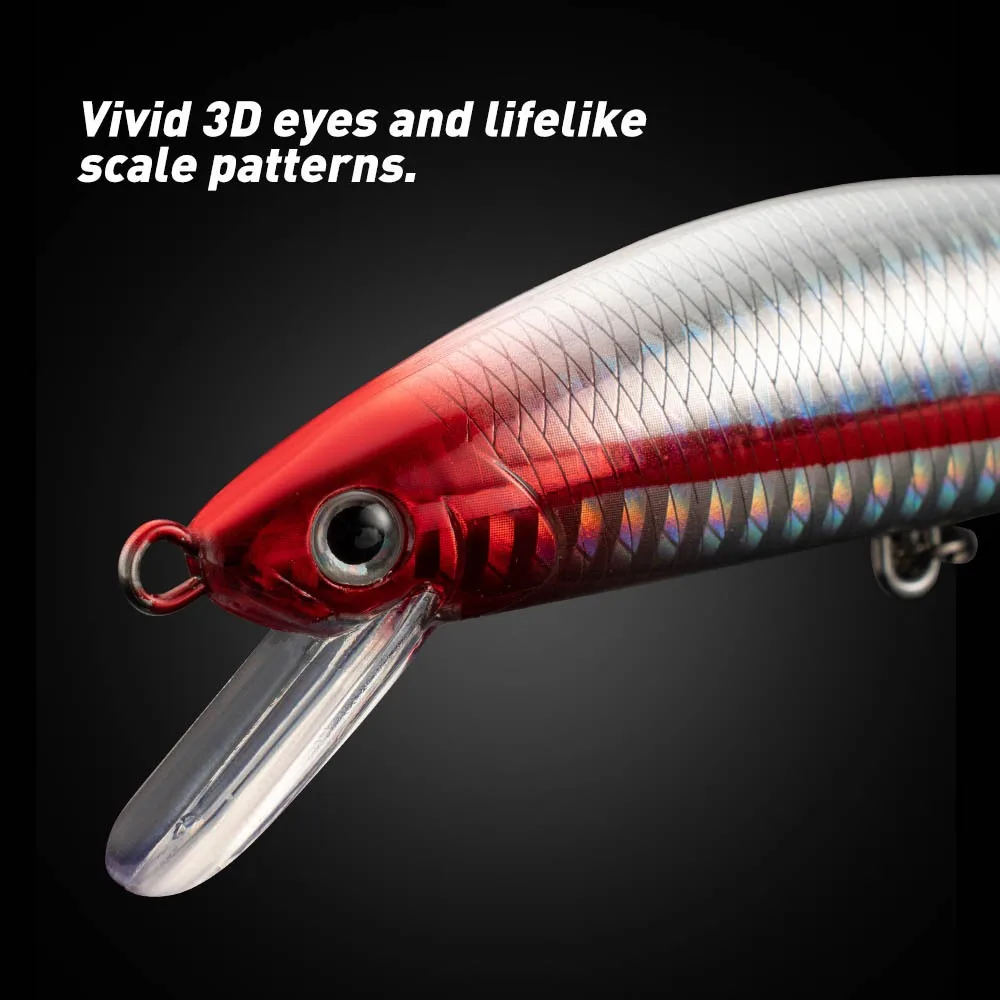
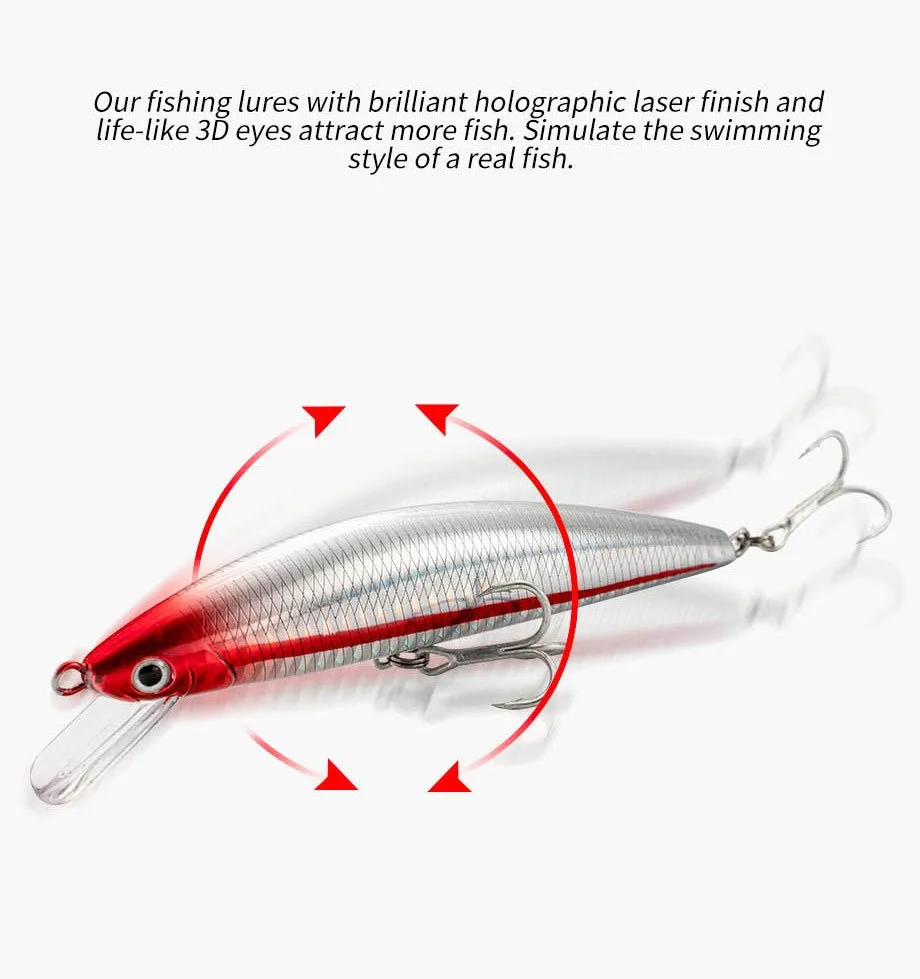
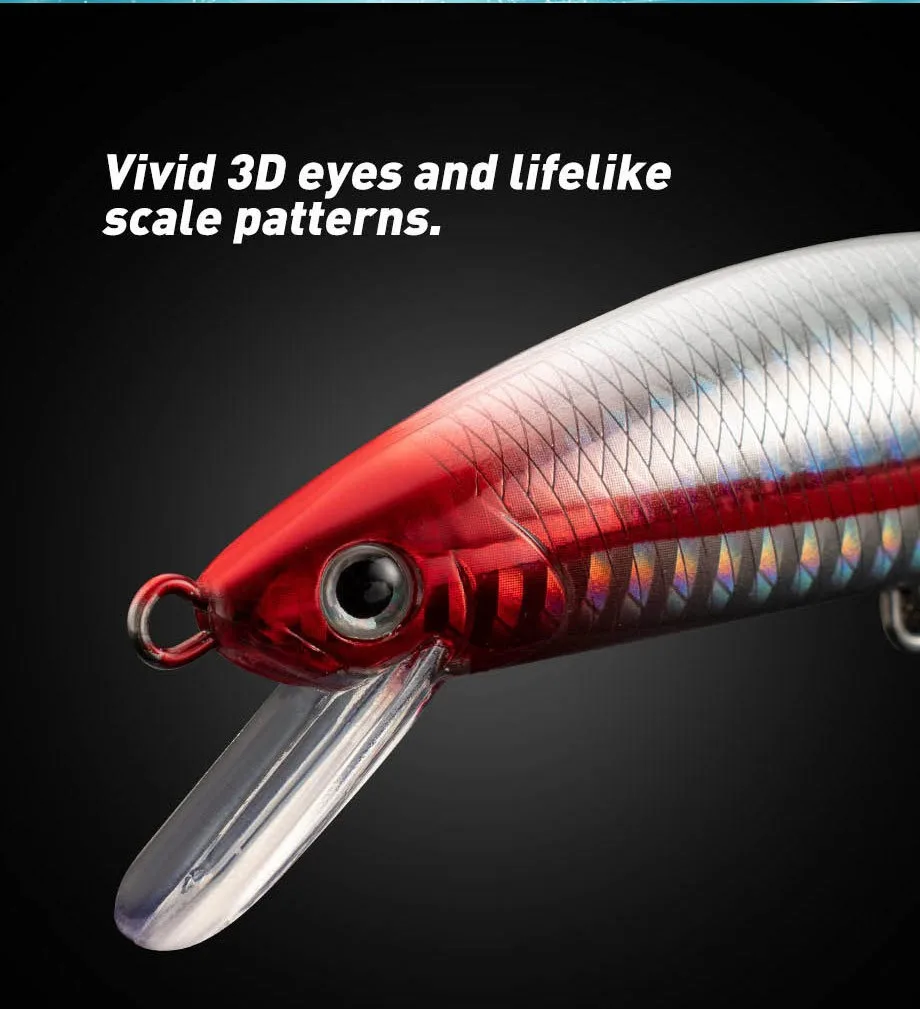
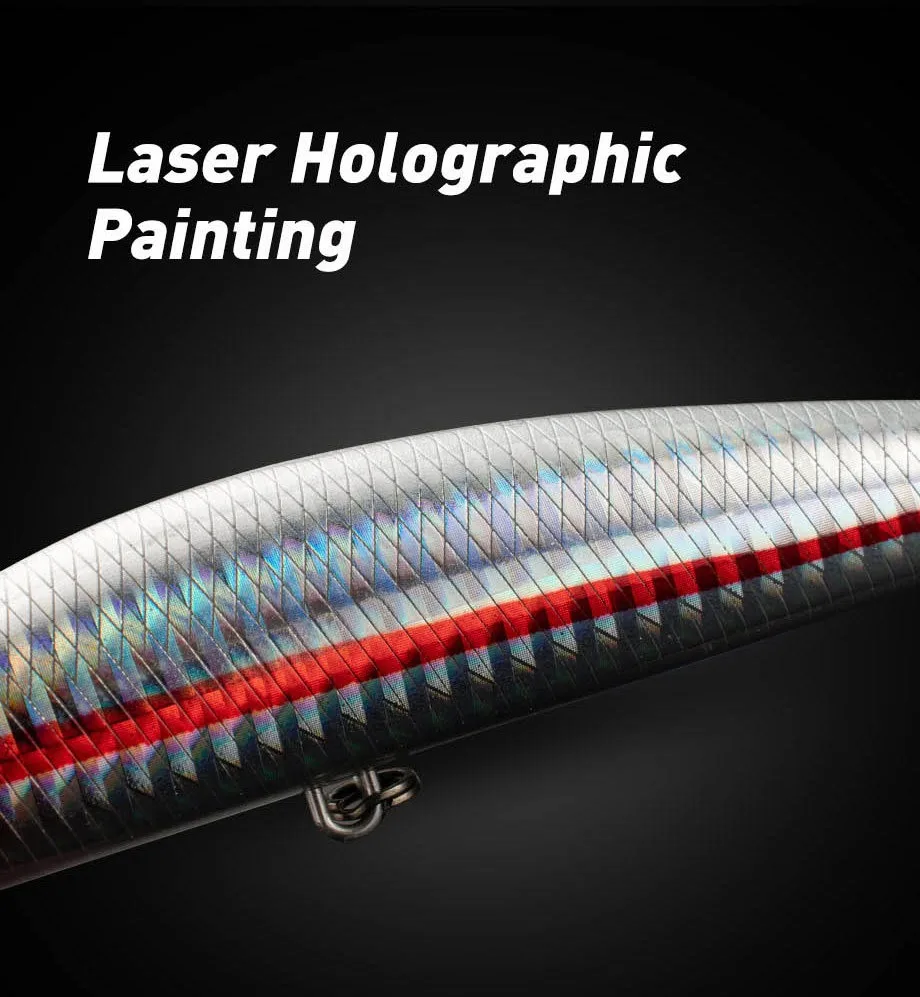
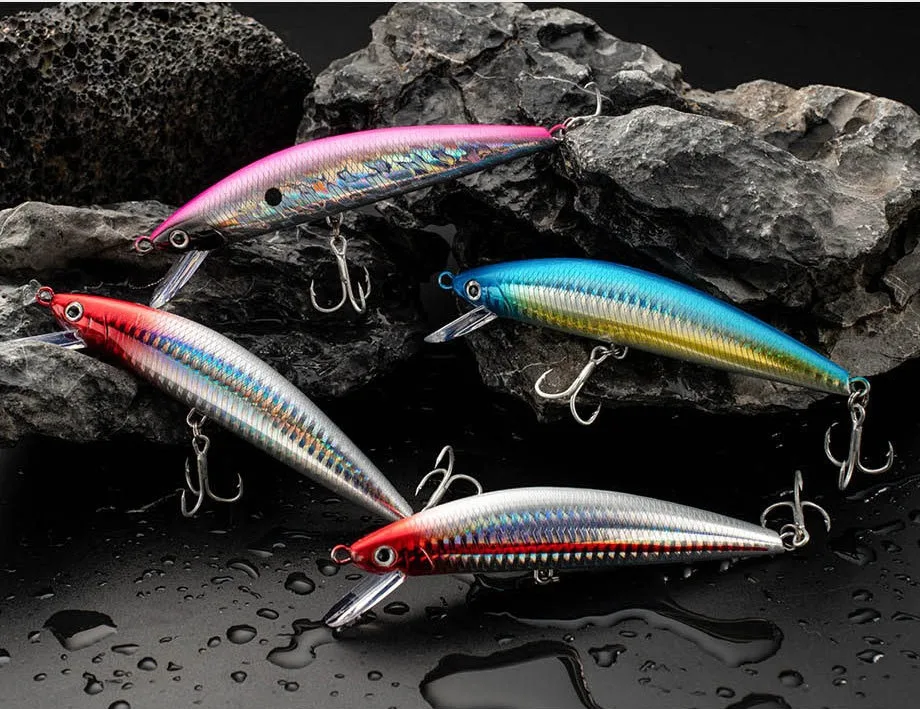
The particular 40 g / 60 g designs this BassFishingTips.US product is based on are marketed globally for sea bass, tuna, barracuda, mackerel and pike. They use high-density bodies, realistic paint jobs and 3D eyes to mimic real bait, with internal weights that keep them tracking straight on the cast and stable on the fall.
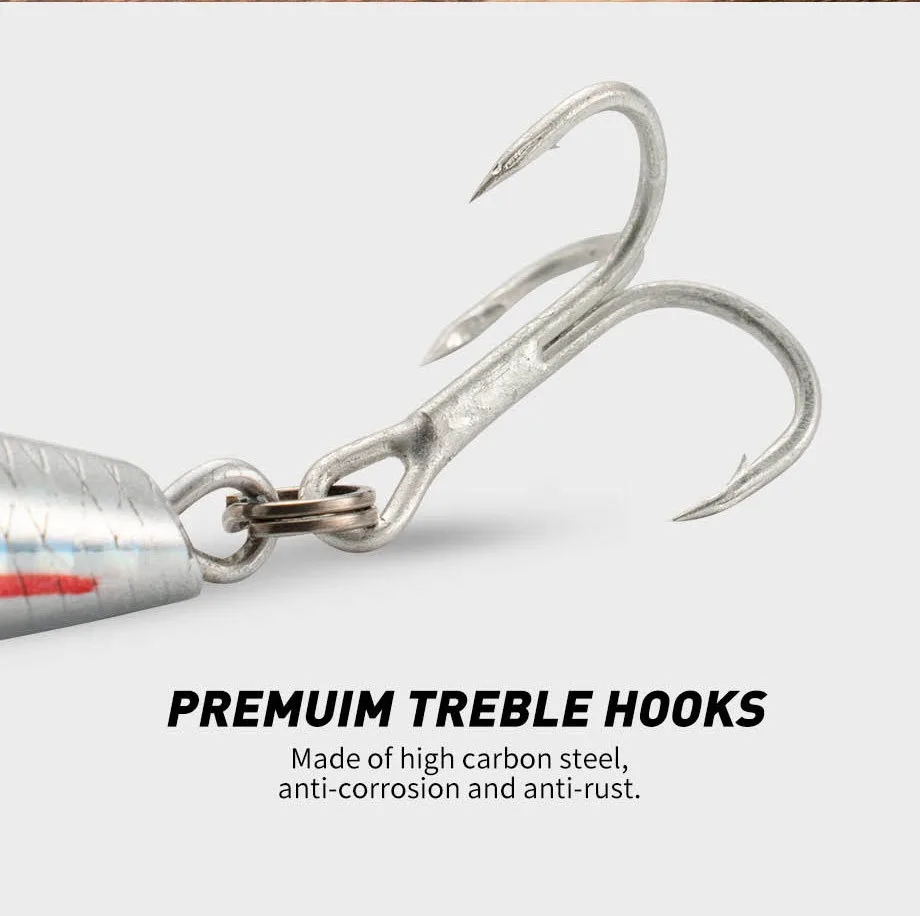
Add in proper saltwater-rated trebles and you have a lure that does exactly what the big-name brands do: flies far, sinks like a baitfish and wobbles in a way that big predators simply cannot stand. If you are already catching on metal jigs and slim plugs, this style of heavy minnow will feel very familiar – just with a slightly more “hardbait” swimming action and often a nicer baitfish silhouette.
Gear Pairing
Because these lures weigh 40 g and 60 g, you want gear that can comfortably handle that payload without blowing up your shoulders or your rod tips.
Rods: From the bank, look at 9–10 ft surf or shore-jigging spinning rods rated somewhere in the 20–60 g range. That gives you enough backbone to punch casts into the wind and work the lure at depth, but still enough sensitivity in the tip to feel that tight wobble and bites on the drop. For boat work, a 7–8 ft medium-heavy spinning or casting rod with a similar lure rating is perfect.
Reels: A 4000–5000 size spinning reel or equivalent low-profile baitcaster with a strong drag is about right. Saltwater guys chasing Spanish mackerel and similar fish from the shore often use exactly that size range so they can carry 150–200 m of braid and keep pressure on fast runs.
Line and leader: 20–30 lb braid gives a good balance of casting distance and abrasion resistance around rocks and structure. For leaders, 25–40 lb fluorocarbon or mono is standard for sea bass and inshore predators; bump to 40–60 lb (and maybe a short wire bite-tippet) if you are targeting toothy fish like barracuda or Spanish mackerel around gnarly ground.
If you want more background on how heavy sinking minnows fit into the bigger picture, have a look at the dedicated heavy sinking minnow lure guide on BassFishingTips.US – it walks through setups, retrieve styles and where they beat standard cranks and spoons.
If you want to geek out on lipless crank retrieves, the guys at Wired2Fish have a cracking breakdown here that pairs perfectly with what this TREHOOK 21g 9cm Rattlin Vib is built to do.
Bassmaster have been shouting about jerkbaits for years, and their all-season jerkbait guide lines up nicely with how you can fish this Bearking Bass Slicker 80 jerkbait from winter through to autumn.
Specs
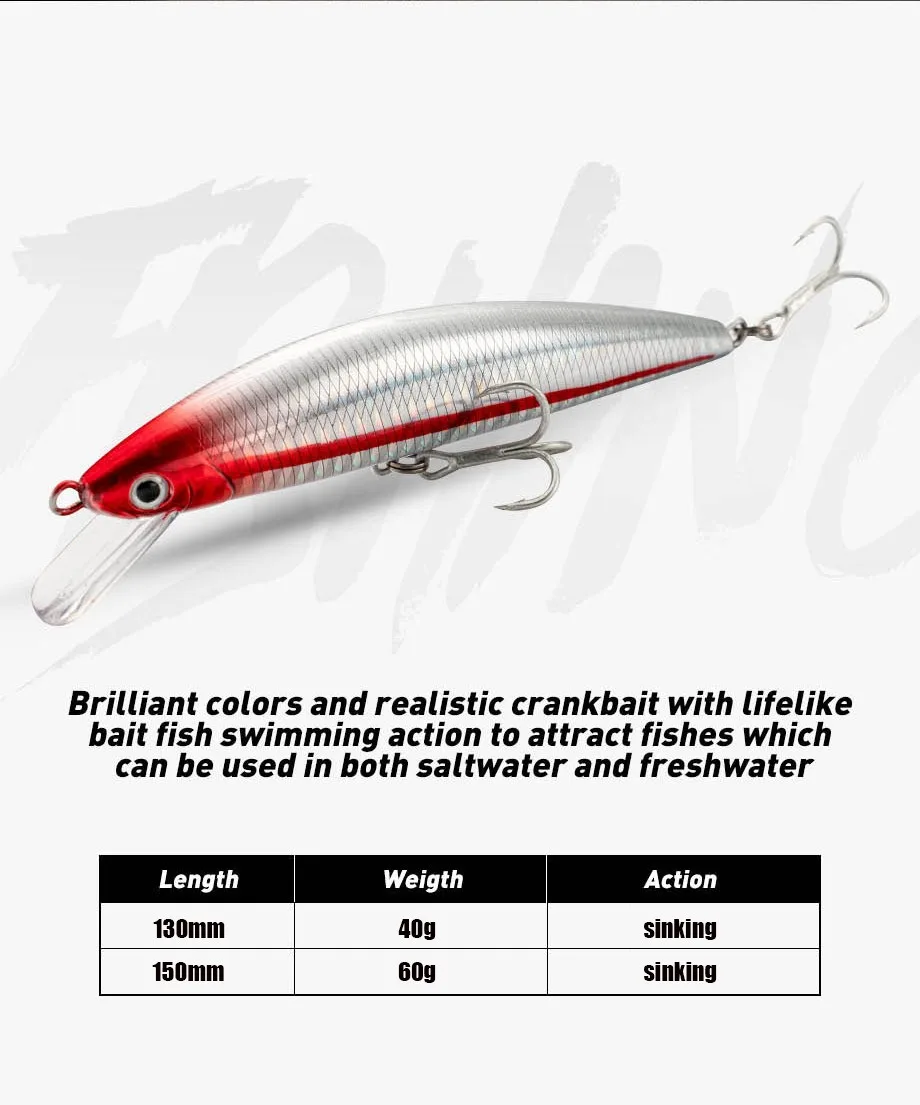
- Product name: Sinking Minnow Fishing Lures 40g 60g Sea Fishing Wobbler Fishing Lures Big Fish Hard Bait Pesca Sea Bass Tuna Sea Wolf Mackerel
- Type: Heavy sinking minnow hardbait (sea fishing wobbler)
- Category: Minnow / jerkbait-style saltwater plug
- Weights: 40 g and 60 g models (approximate range based on supplier listings of this lure family)
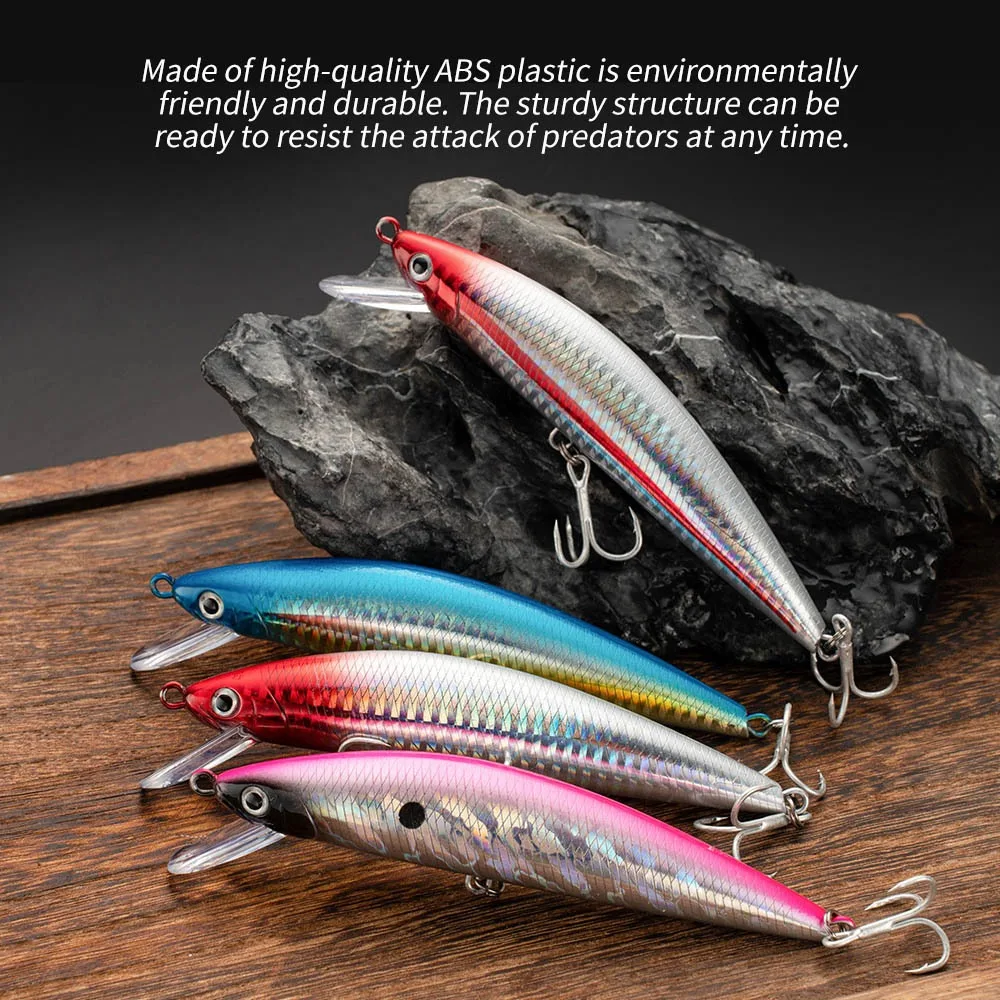
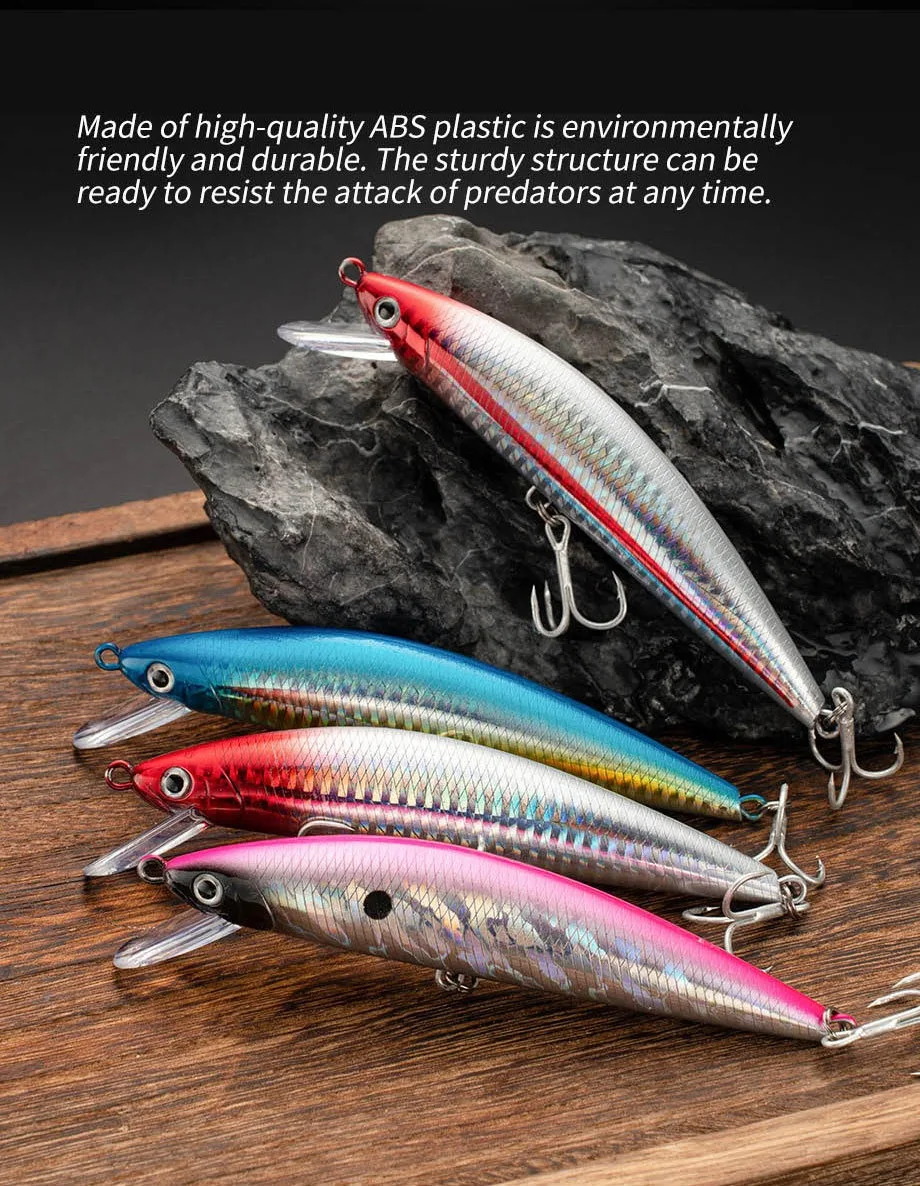
- Material: ABS plastic hard-body with internal weight (typical of this 40 g sinking minnow family)
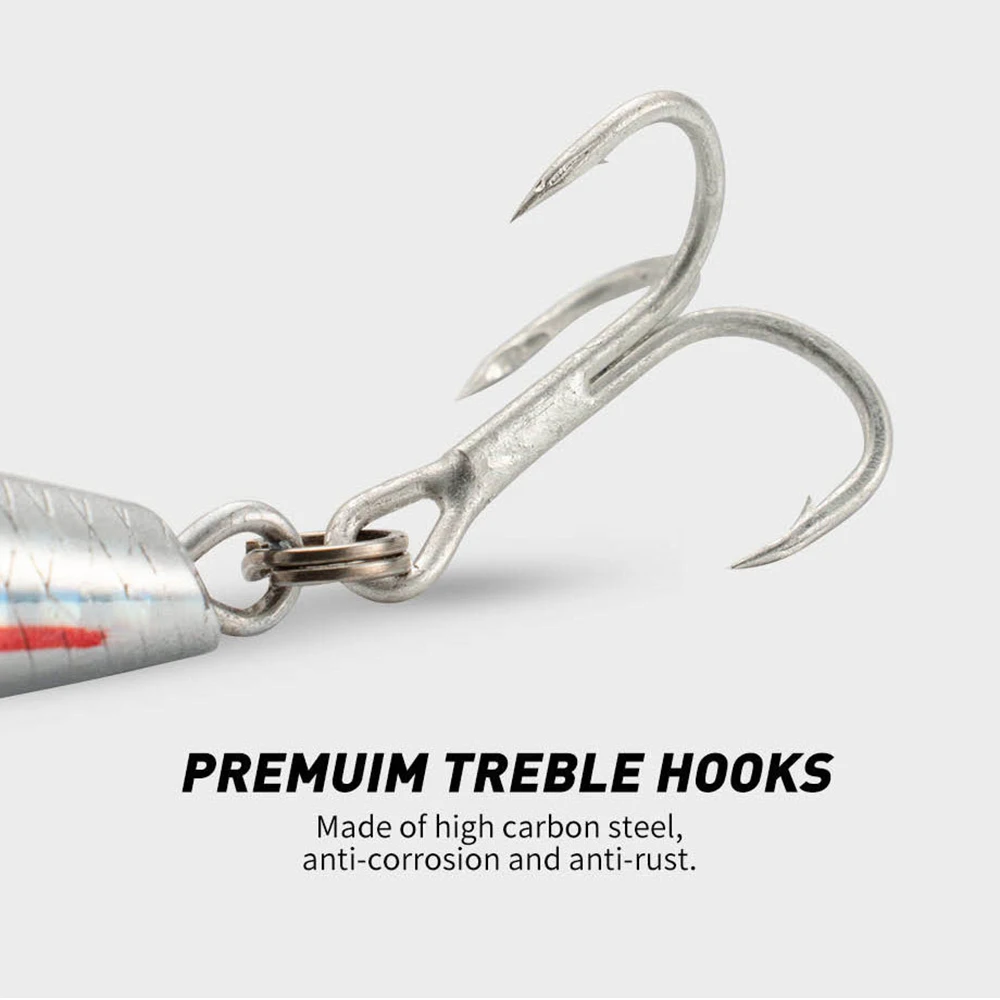
- Hooks: Fitted with treble hooks suitable for saltwater use
- Action: Fast-sinking, tight-wobble minnow with long-cast design
- Target species: Sea bass, tuna, mackerel, barracuda, pike and other inshore and offshore predators
- Position: Surf beaches, rock ledges, harbour walls, rivers, lakes and offshore boats
- Pack size: Commonly sold in 5-piece sets covering different colours and/or weights in this range
FAQ
Are these sinking minnow fishing lures 40g 60g just for saltwater?
No. They are clearly made with sea bass, tuna and mackerel in mind, but they will also happily catch freshwater predators like pike, zander and big trout in large reservoirs. Just match your leader to whatever teeth you are dealing with.
How deep will they run on the retrieve?
Because they are true sinking minnows, you control depth with your countdown and retrieve speed. A short 2–3 second sink and quick retrieve rides mid-water; a longer 5–10 second count and slower retrieve will get them closer to the bottom, especially in 5–15 m of water.
Do I need wire trace for mackerel and tuna?
For most mackerel and school-sized tuna a heavy fluorocarbon leader is fine. If you are around big barracuda or other really toothy critters, add a short wire section above the lure so you are not donating gear every time you hook up.
Will they work from small jetties or piers?
Yes – that is one of their best roles. Use the 40 g version where casting space is tight, and the 60 g version when you need to reach way out past the boats or bait schools. Work them in a straight retrieve or with a lift–drop along any visible structure.
What colours should I start with?
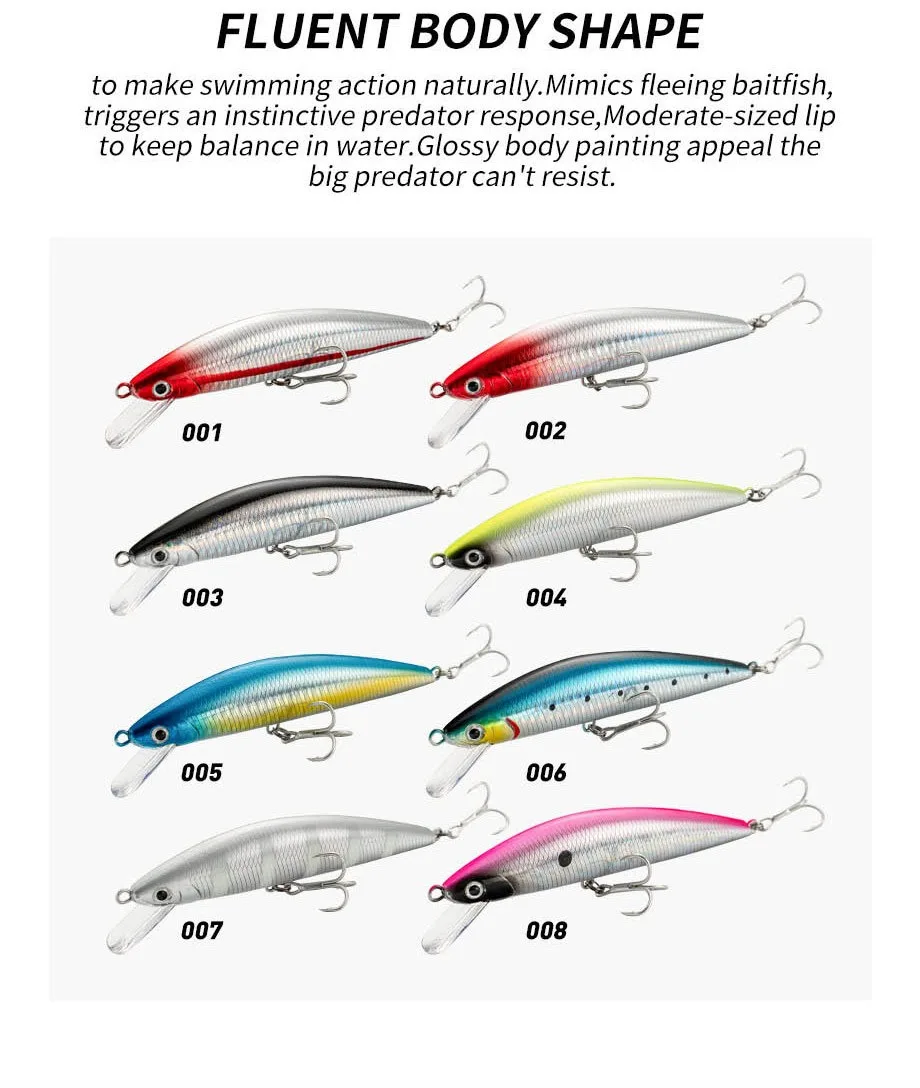
Keep it simple: one natural baitfish colour (silver/blue or green), one darker back profile for clear bright days, and one high-contrast pattern for low light or churned water. You can fine-tune from there once you see what your local fish prefer.
Is the Burle Topwater 14g pencil popper only for bass?
No – the Burle Topwater 14g pencil popper also works for perch and trout when they are feeding on insects near the surface.
Final Verdict
If you keep staring at bait just out of range and muttering under your breath, these sinking minnow fishing lures 40g 60g are the fix. They are purpose-built for long casts, fast sinks and a tight, aggressive minnow wobble that big predators recognise instantly as an easy meal. You get the casting reach of a metal jig with the profile and swim of a proper baitfish plug, which is a cracking combo when you are chasing sea bass, tuna, mackerel and other pelagics in serious water.
Pair them with a sensible saltwater spinning setup, a decent length of braid and a leader that can handle teeth, and you have a lure that will put a serious bend in your rod from the rocks, the beach or the boat. It is not a finesse toy – it is a blunt instrument for reaching the nasty stuff and annoying the biggest fish in the pack.
Load a few of these heavy Burle Topwater 14g pencil popper and get ready, stop watching the blitz just out of range – start throwing straight into it.
Real customer reviews