
Real talk – when a paddle tail swimbait for bass does the heavy lifting
You know those days where you can see bait dimpling on the surface, a few suspicious boils on the edge of a point, but nothing is actually eating your spinnerbait or worm? That is the perfect time to pull out a paddle tail swimbait for bass and let it do that lazy, believable baitfish thing bass cannot stand.
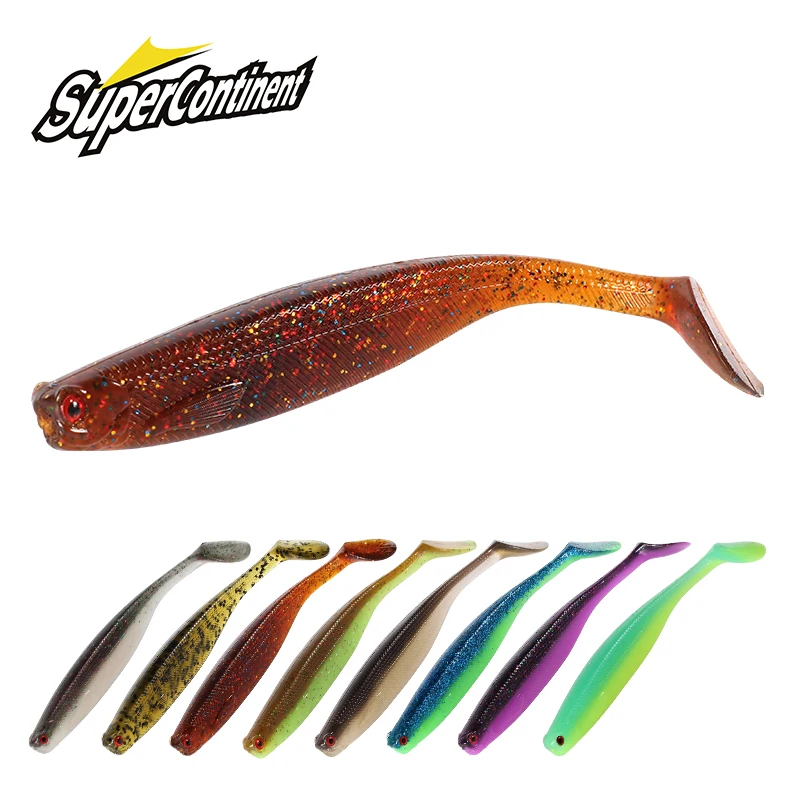
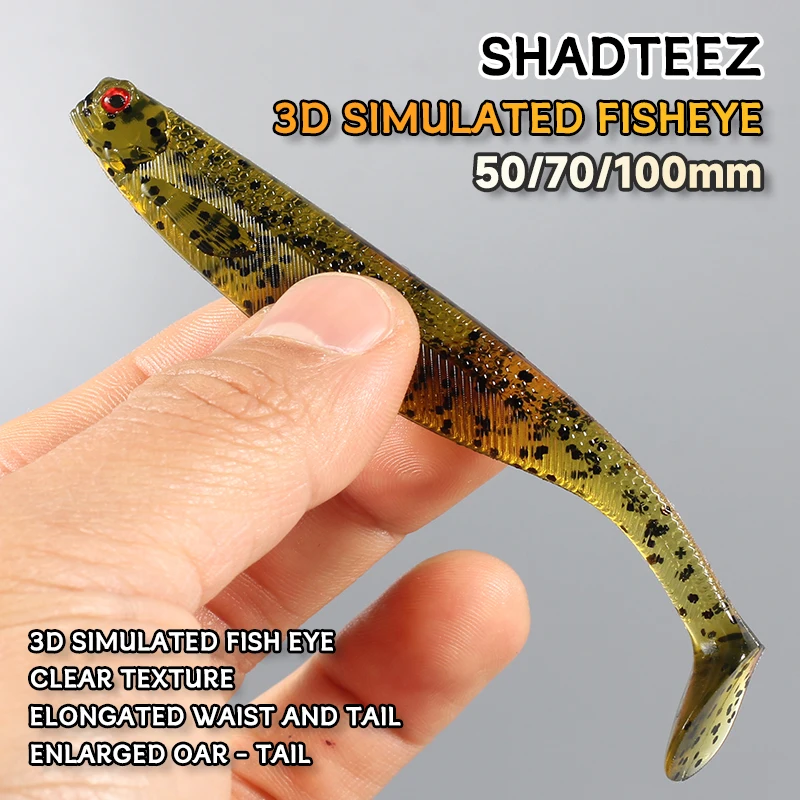
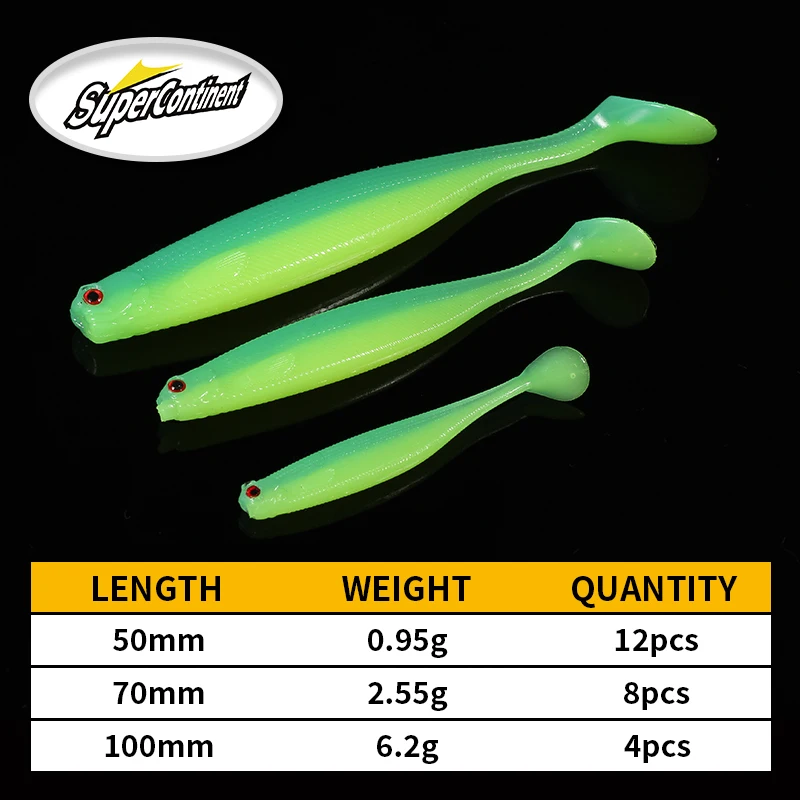
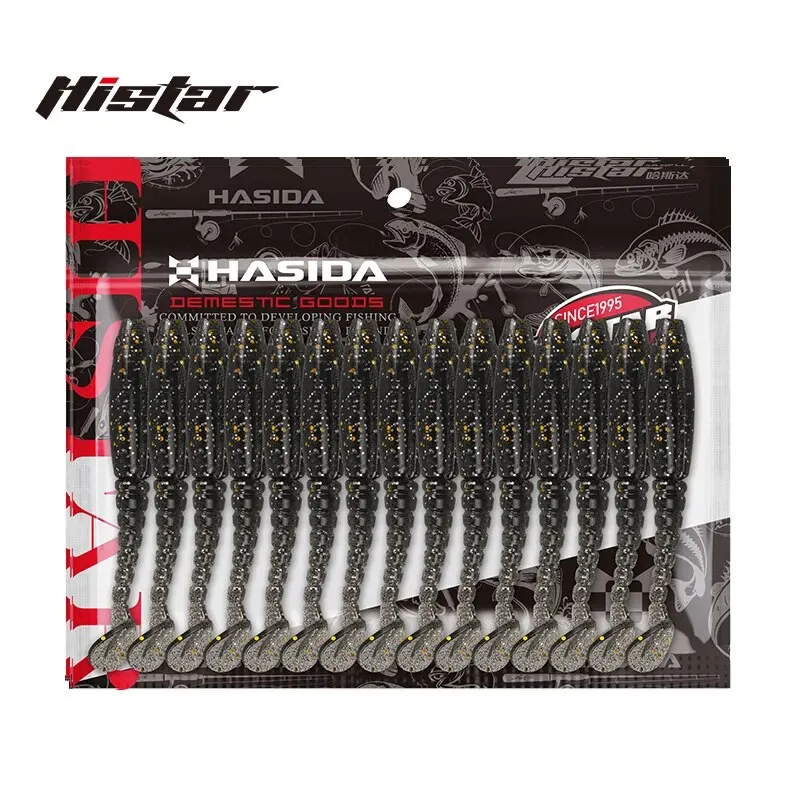
These Supercontinent ShadTeez soft lures are basically your “I am not sure what to throw, but they are definitely on bait” option. You get three practical sizes straight out the packet – 50mm / 1.97 inch(12 pieces, 0.95g each), 70mm / 2.76 inch(8 pieces, 2.55g each) and 100mm / 3.94 inch(4 pieces, 6.2g each). That means you can go from little snack-sized offerings all the way up to a bigger meal without changing style, just size.
The body shape is classic shad style: a rounded head, a narrow waist and a nice, round paddle tail. It is exactly what all the swimbait lads talk about when they bang on about matching the hatch. You tie one on, cast it out, wind it back and suddenly your paddle tail swimbait for bass looks just like the baitfish that have been getting chased round all morning.
Why you will love this paddle tail swimbait for bass
- Three sensible sizes: 5cm, 7cm, and 10cm so that you can match small fry, average baitfish, or a proper mouthful.
- Plenty in each pack: 50mm 12-pack, 70mm 8-pack, and 100mm 4-pack give you enough bodies to get through bites and nibbles.
- Predator ready: pitched for pike and zander as well as bass, so you know the profile is proper “eat me” baitfish.
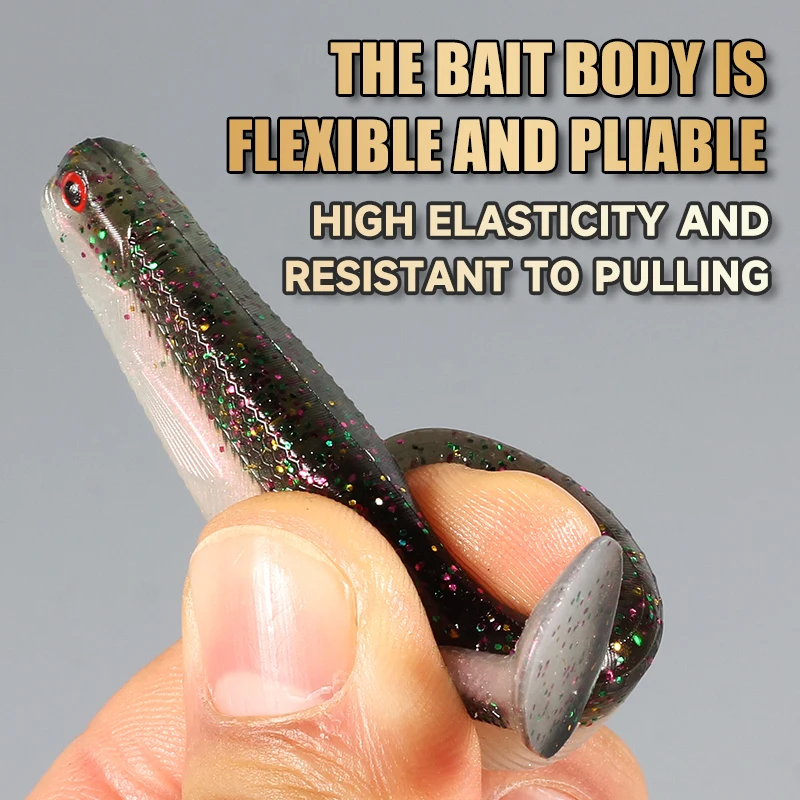
- Soft paddle tail body: flexible plastic lets the tail thump and roll even on a slow retrieve.
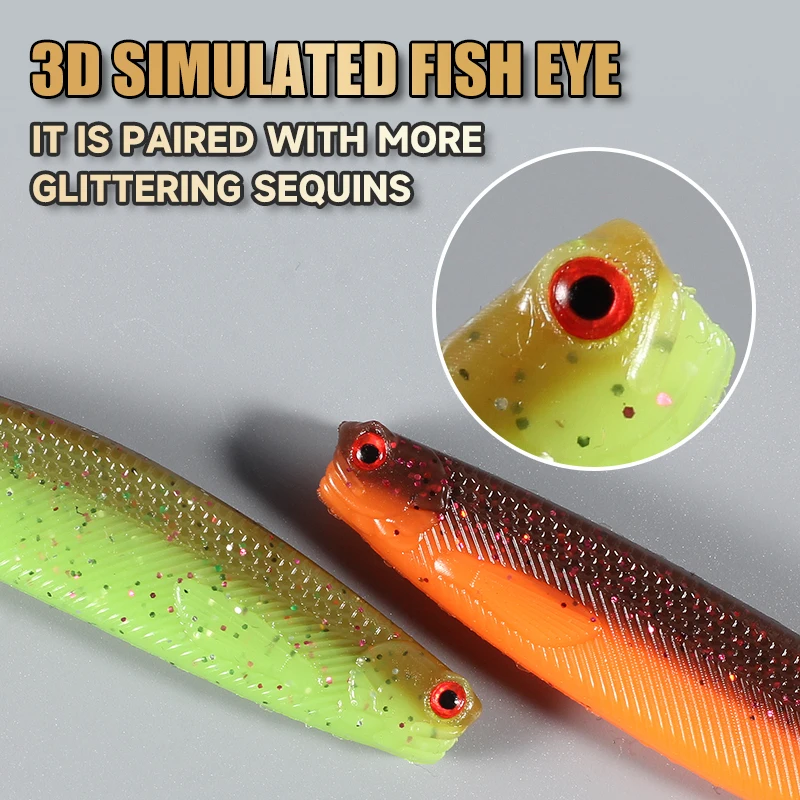
- 3D eyes and detailed shape: little extra realism when fish get close and give it the side eye.
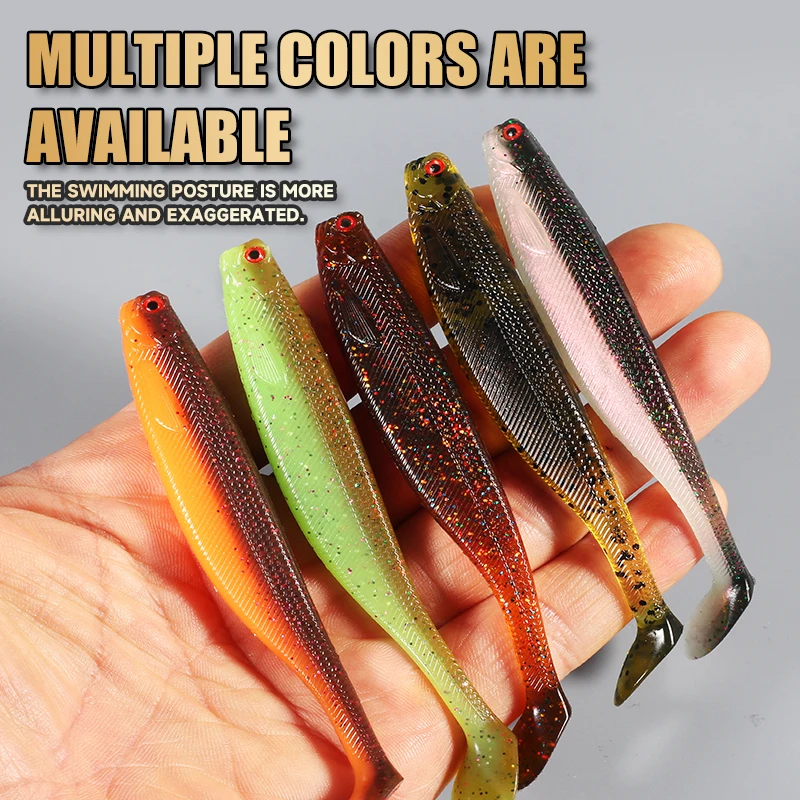
- Colour range A to O: a full run of natural and brighter patterns so you can cover clear water, stain and low light.
- Lake friendly: designed as a general predator lure, perfect for lakes, dams and big reservoirs.
How to fish this paddle tail swimbait for bass
The nice thing is, you do not need to be a tackle nerd to make this work. A paddle tail swimbait for bass is about as plug-and-play as lures get – but there are a few little tweaks that turn it from “chuck and hope” into something a bit more deadly.
1. Jig head, cast, and wind
- Pick a jig head that suits the size – light heads for the 50mm and 70mm, slightly heavier for the 100mm.
- Thread the body on straight so the tail tracks true and does not roll over.
- Cast beyond your target – points, grass edges, rock seams, windblown banks.
- Let it sink a bit, then start a slow, steady retrieve so you can just feel that tail kick.
Wired2Fish have a brilliant breakdown on keeping paddle tails rigged straight and swimming naturally, which is well worth a look if you are still fighting with bent baits and weird spins: Wired2Fish beginner’s paddle tail guide.
2. Weedless for grass and snags
- Rig the paddle tail swimbait for bass on a wide gap EWG hook, Texposed or fully skin hooked.
- Cast tight to weedbeds, timber or laydowns that would eat treble hooks for breakfast.
- Let it fall into the holes, then slowly swim it out and along the edge.
- Add a few rod twitches to make it flare and change pace when it hits openings.
Bassmaster have hammered home for years how soft swimbaits rigged weedless can pick apart shallow cover without constant re-rigging. Their swimbait basics article is a solid one to skim: Bassmaster swimbaits for everyone.
3. Bottom hopping and slow crawling
- Use a slightly heavier jig head on the 70mm or 100mm version.
- Cast over deeper points, ledges or channel swings.
- Let the lure hit bottom, then drag, lift and drop it back down, keeping contact.
- Most bites feel like a little “tick” or the lure just getting heavy – wind into them.
Outdoor Life and other mags have shown time and again that soft swimbaits fished near the bottom are absolute murder on pre-spawn and post-spawn fish that want an easy meal. Their big swimbait coverage makes a strong case for going slightly larger when you are fishing slower: Outdoor Life best swimbaits for bass.
When to throw this paddle tail swimbait for bass
- Spring: 50mm and 70mm around staging banks and the first breaks outside spawning pockets.
- Summer: 70mm and 100mm along windy points, open water bait schools and grass edges.
- Autumn: all three sizes round bait chasing fish on main lake points and creek mouths.
- Winter: heavier heads and the 70mm or 100mm versions crept along deeper drops and channels.
- Water clarity: in clearer water, go natural colours. In stain or low light, pick one of the bolder patterns from the A to O colour run.
A paddle tail swimbait for bass really earns its keep when fish are on small to medium baitfish and not locked tight to the bottom. Any time you see fish pushing bait or see flickers on the surface, you are in the right ballpark.
Does this paddle tail swimbait for bass really catch fish?
Short answer: yes, if you actually point it at fish and keep it moving. Swimbaits in general have gone from “niche big bait thing” to a proper staple because they look and feel like the real food, not a bit of random hardware.
Bass fishing sites from Wired2Fish to Outdoor Life keep repeating the same message – soft swimbaits, especially paddle tails, are fish catchers all year when you match the size and speed to the conditions. Wired2Fish even have whole pieces on rigging and retrieving paddle tails in different ways for different depths: Wired2Fish swimbait rigging tips.
If you want something a bit more general that still backs up why your paddle tail swimbait for bass belongs on the deck, have a skim of this swimbait overview that hammers home how versatile these things actually are: Bassmaster how can I catch more swimbait bass.
What gear to throw it on and other lures worth packing
The good news is you do not need to remortgage the house to fish this stuff. Your normal bass gear will handle a paddle tail swimbait for bass just fine.
- Rod: medium or medium-heavy spinning or baitcaster, around seven feet, with a bit of tip so you can cast light heads and still drive the hook.
- Reel: 2500 size spinner or a six-to-seven-ratio baitcaster – basically whatever you are comfy winding a steady retrieve with.
- Line: ten to fifteen-pound fluorocarbon, or braid with a fluorocarbon leader if you prefer more sensitivity.
It is also worth keeping a couple of backup options in the box for when they want the same general idea but a slightly different look:
- If you fancy a more classic-shaped soft swimbait, the Meredith Easy Shiner Swimbait is a cracking little all-rounder.
- When they slide off, and you want to go chunkier and deeper, a heavy soft and jig combo like the Hunthouse Black Minnow lets you reach them.
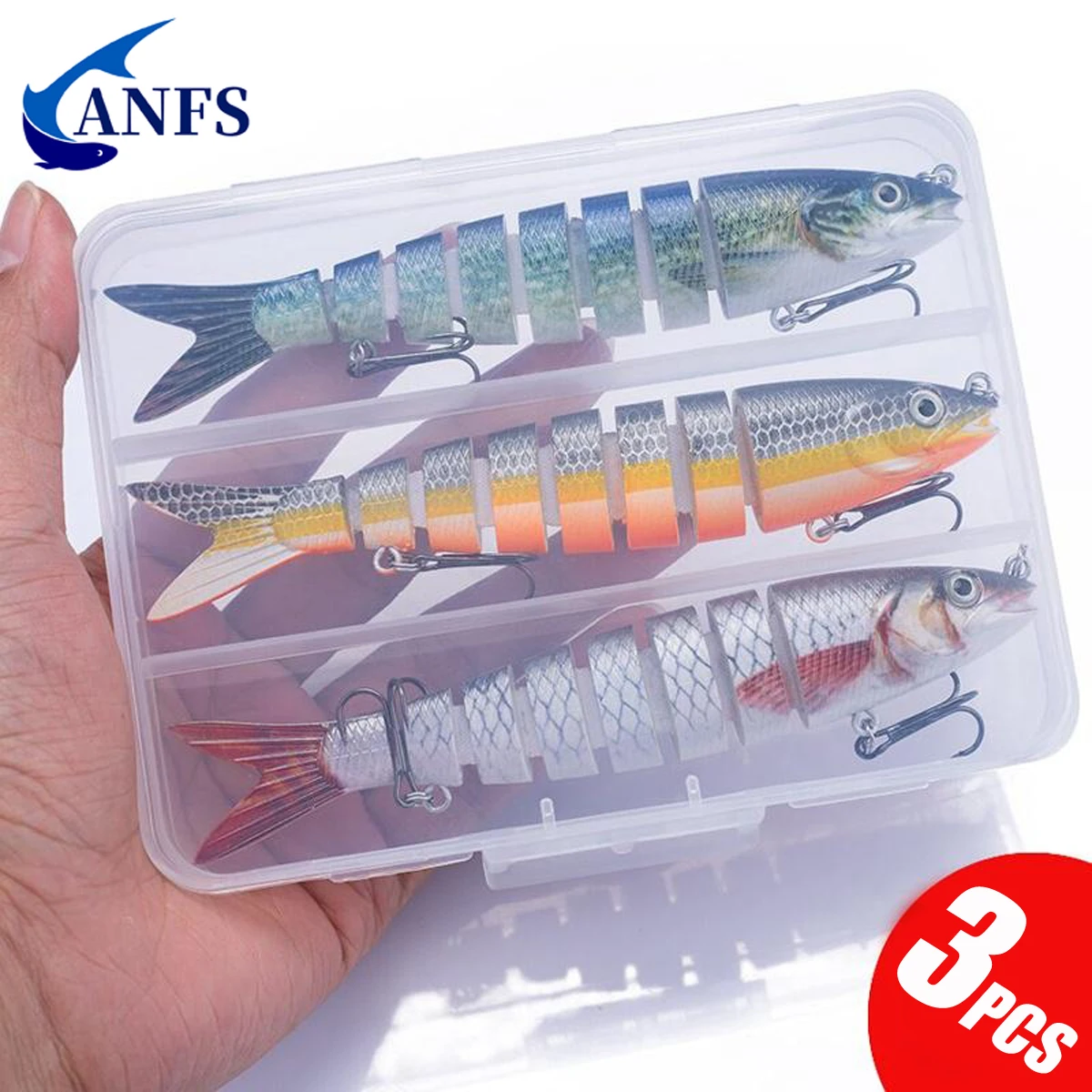
- For a change-up from soft stuff, a multi-jointed hard swimbait like the 3 Piece 8 Segment Swimbait Set gives a bigger visual presence.
Specs at a glance
- Lure type: soft plastic paddle tail swimbait style shad
- Brand: Supercontinent
- Lengths and packs: 50mm 12 pieces, 70mm 8 pieces, 100mm 4 pieces
- Approximate weights: 50mm 0.95g, 70mm 2.55g, 100mm 6.2g
- Body profile: shad-shaped soft body with a rounded paddle tail
- Eyes: 3D eyes
- Material: soft plastic lure body
- Target species: bass, pike, zander and other predators
- Colours: multiple patterns labelled A through O
- Pack contents: one mixed-size pack per purchase option, as listed above
- Position: designed for lake fishing
FAQ – paddle tail swimbait for bass questions your mates actually ask
Can I fish the smallest size on light spinning gear?
Yes, the 50mm option of this paddle tail swimbait for bass is light enough to fish on proper finesse spinning gear with light braid or mono. It is spot on for pressured fish, ponds and clear water.
Which size should I start with if I am new to swimbaits?
The 70mm version is a great starting point. Big enough to get noticed, small enough that you will still catch numbers. Once you are confident, step up to the 100mm when you fancy hunting a better one.
Do I have to fish it fast to get the tail moving?
No. One of the main points of a good paddle tail swimbait for bass is that the tail kicks even on a slow, lazy retrieve. If it is not moving, check your rigging and make sure the body is straight on the hook.
Is this any good for night or low-light sessions?
It can be, especially in the bigger sizes. Pick one of the stronger colours and keep a steady retrieve so fish can home in on the vibration and silhouette. Do not be afraid to go 100mm after dark.
Will pike and zander eat these as well as bass?
Definitely, the lure is pitched as a general predator bait, so pike and zander are right in the crosshairs. Just remember to use a suitable trace or heavier leader where toothy things are common.
Ready to let this paddle tail swimbait for bass do its thing?
If you want one lure style that you can chuck almost anywhere and any time of year, a paddle tail swimbait for bass like this Supercontinent ShadTeez is about as safe as it gets. Pick your size, match a sensible head or hook, and let that little tail do the selling for you. Next time the fish are chasing bait but ignoring your usual favourites, give them this and see who blinks first.
Clip on a ShadTeez paddle tail, fire it where the bait is nervous and just wind – when the rod lurches over, try to look calm while your heart falls out your chest.

Real customer reviews