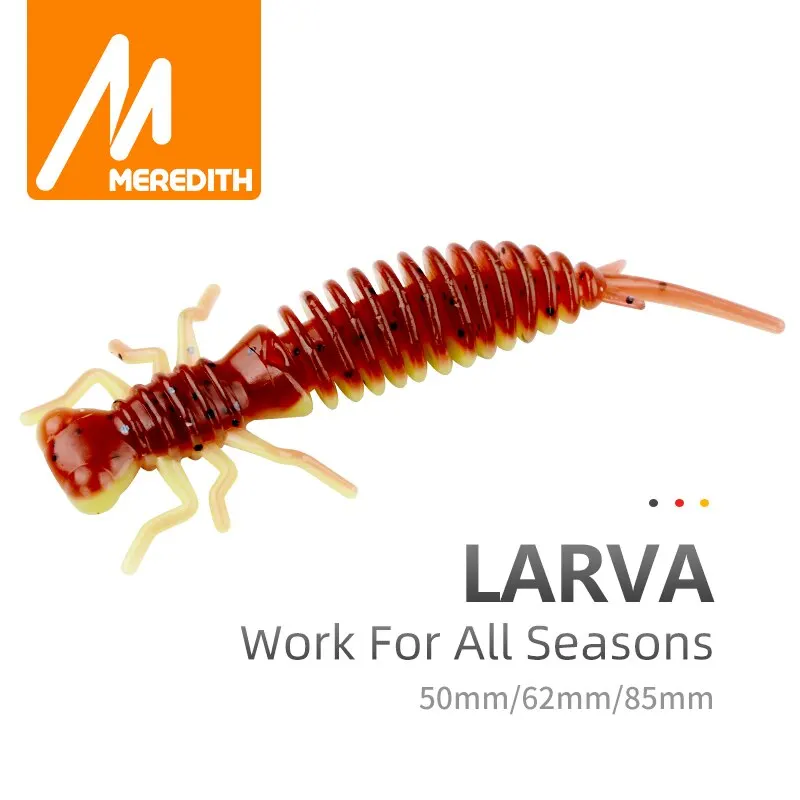
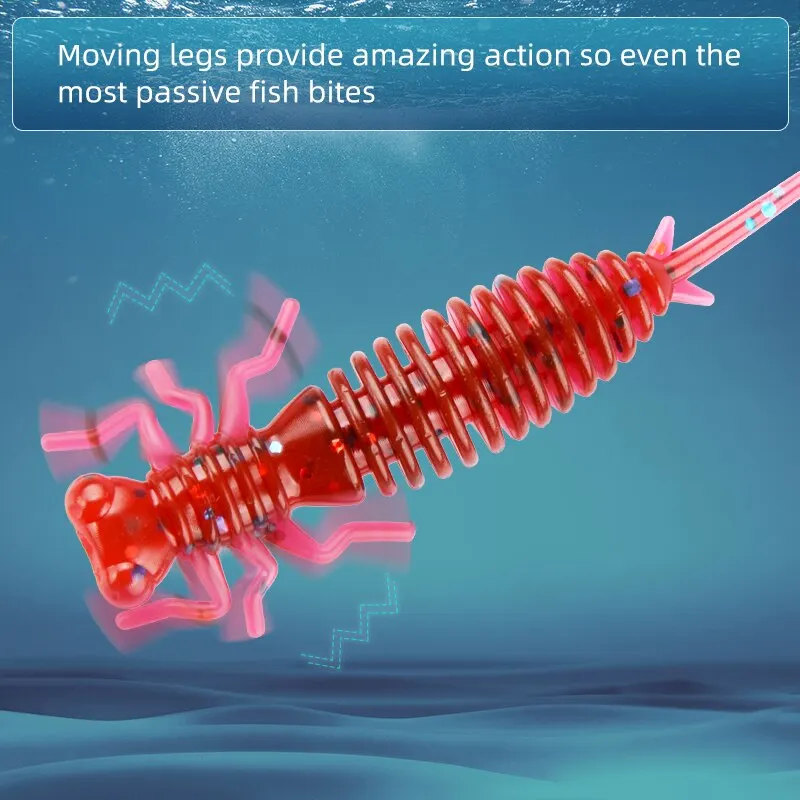
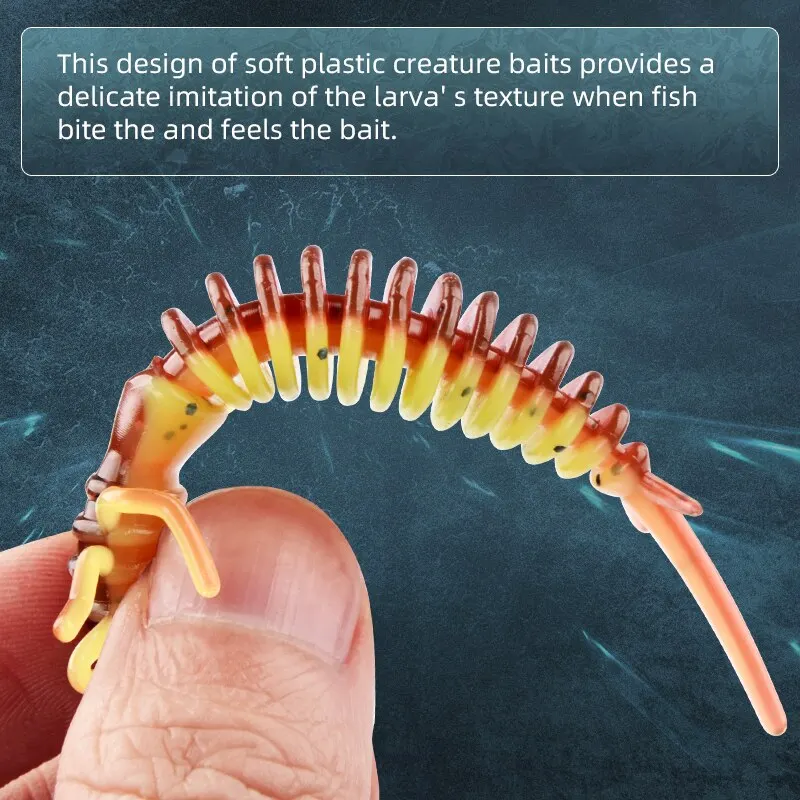
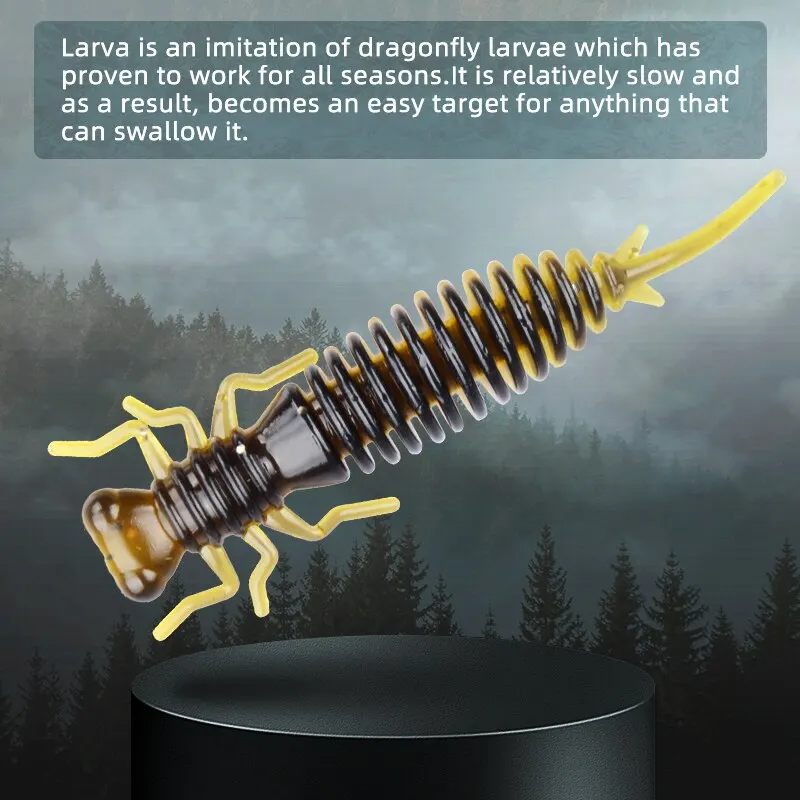
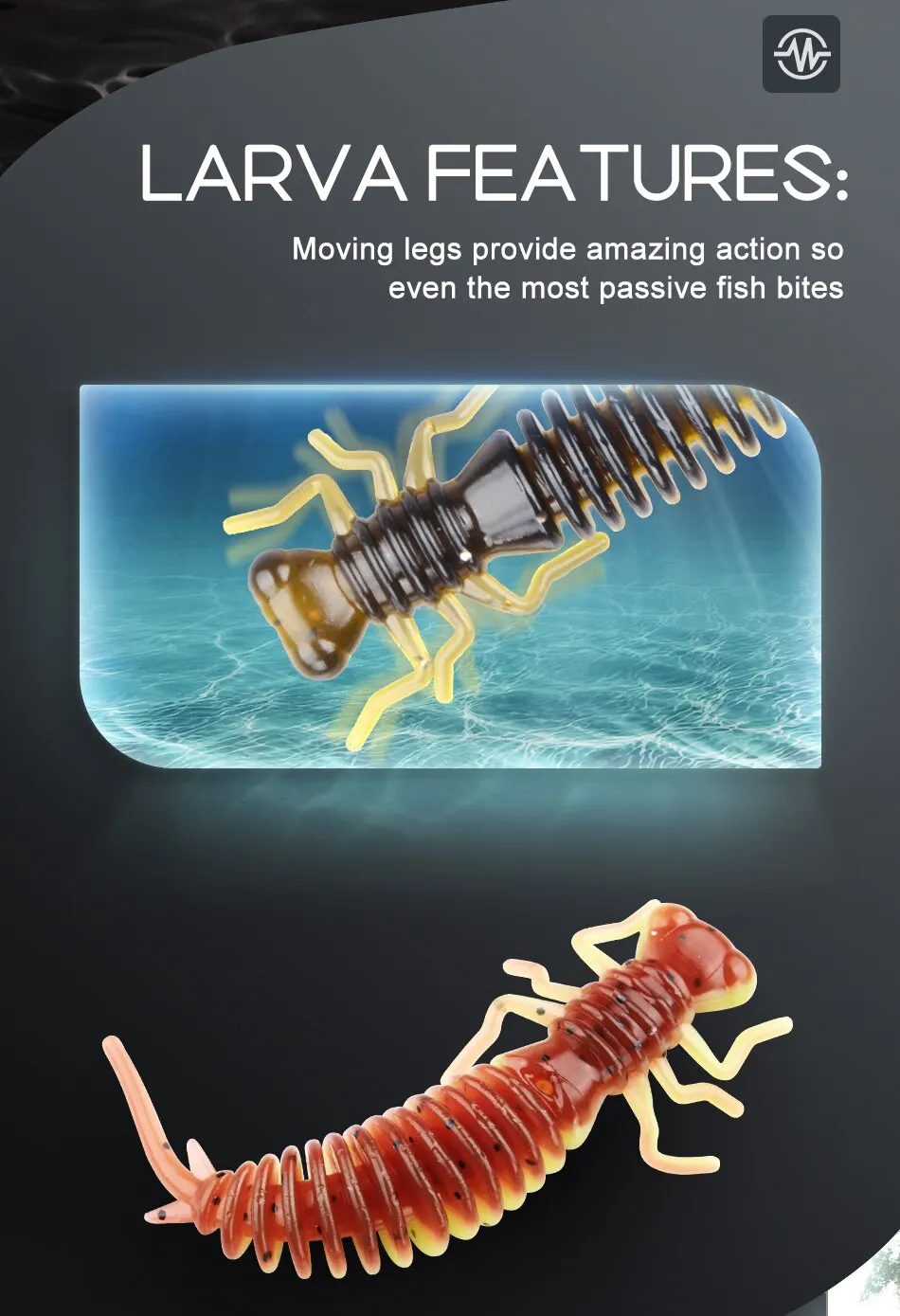
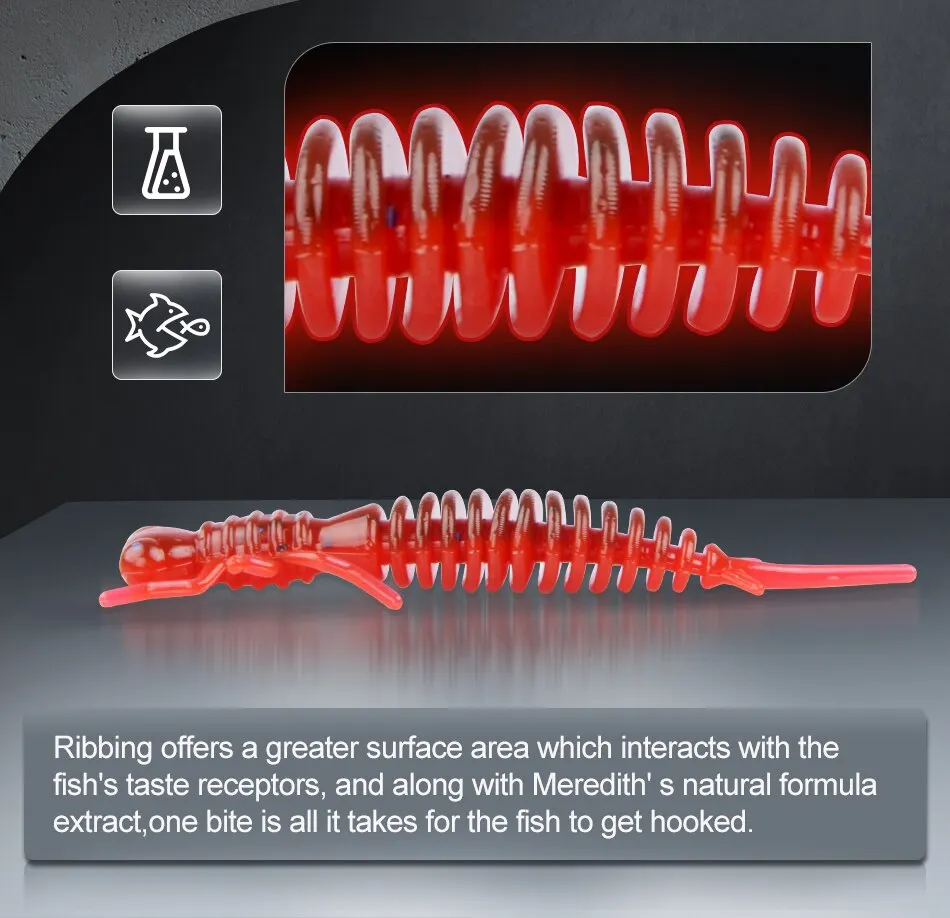
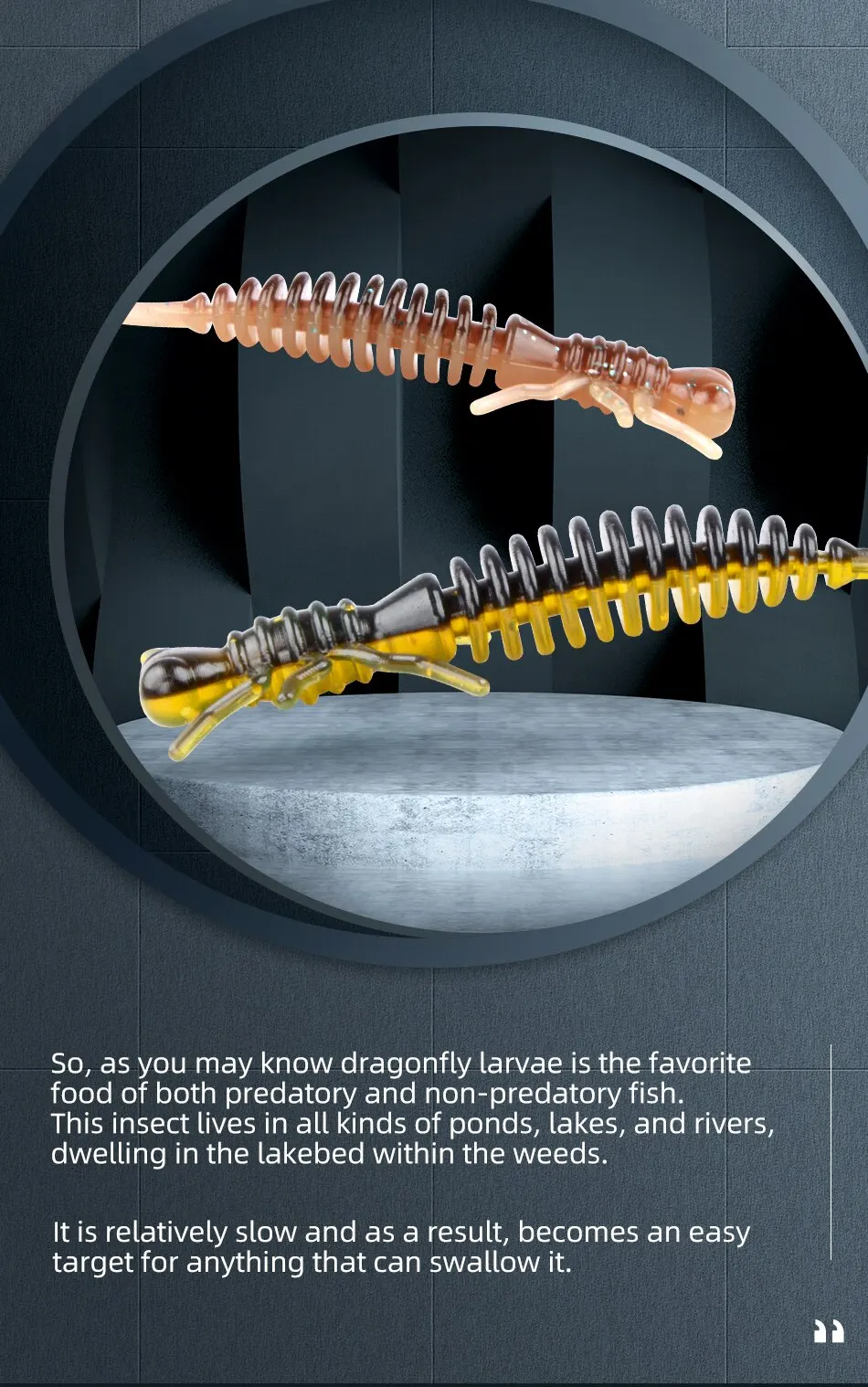
Right mate, MEREDITH Larva Soft Lures are one of those baits that look a bit weird in the packet, then make perfect sense the second you remember what actually lives in the weeds. This is a soft plastic creature bait designed to imitate a dragonfly larva (nymph) — the underwater bug stage that spends its life crawling around lakebeds, weed clumps, and margins like a little protein sausage waiting to get eaten. The product page even spells it out: dragonfly larvae live in ponds, lakes, and rivers, dwelling in the weeds on the lakebed, moving slow, and becoming an easy target. That is exactly the “meal” you are presenting here.
So if you have been hammering crankbaits, ripping jerkbaits, and watching fish follow like they are window-shopping, MEREDITH Larva Soft Lures are your “fine, be like that then” answer. You fish them slower, closer to cover, and you let hungry fish do what they do best: hoover up the easy stuff.
Why This Lure Works
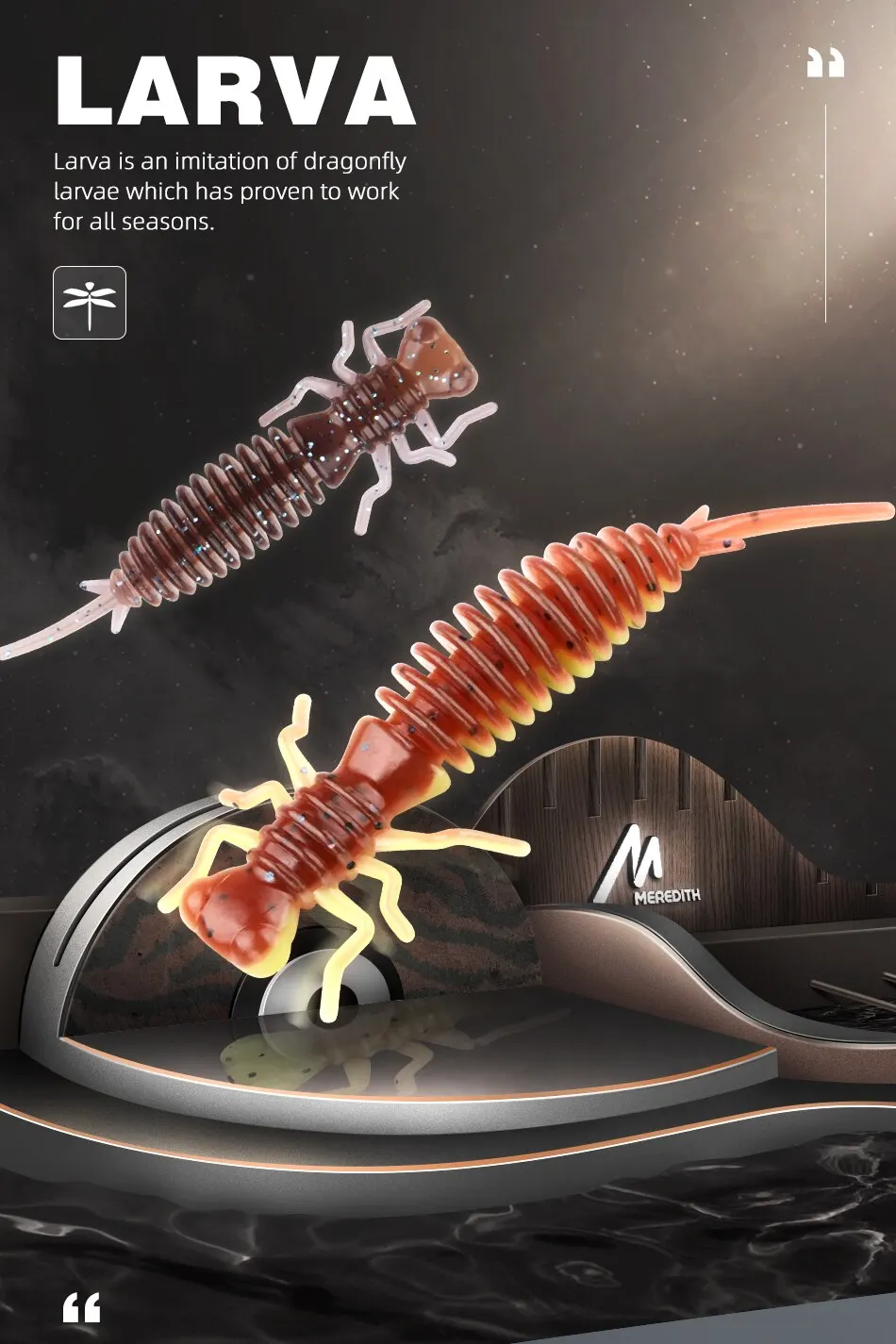
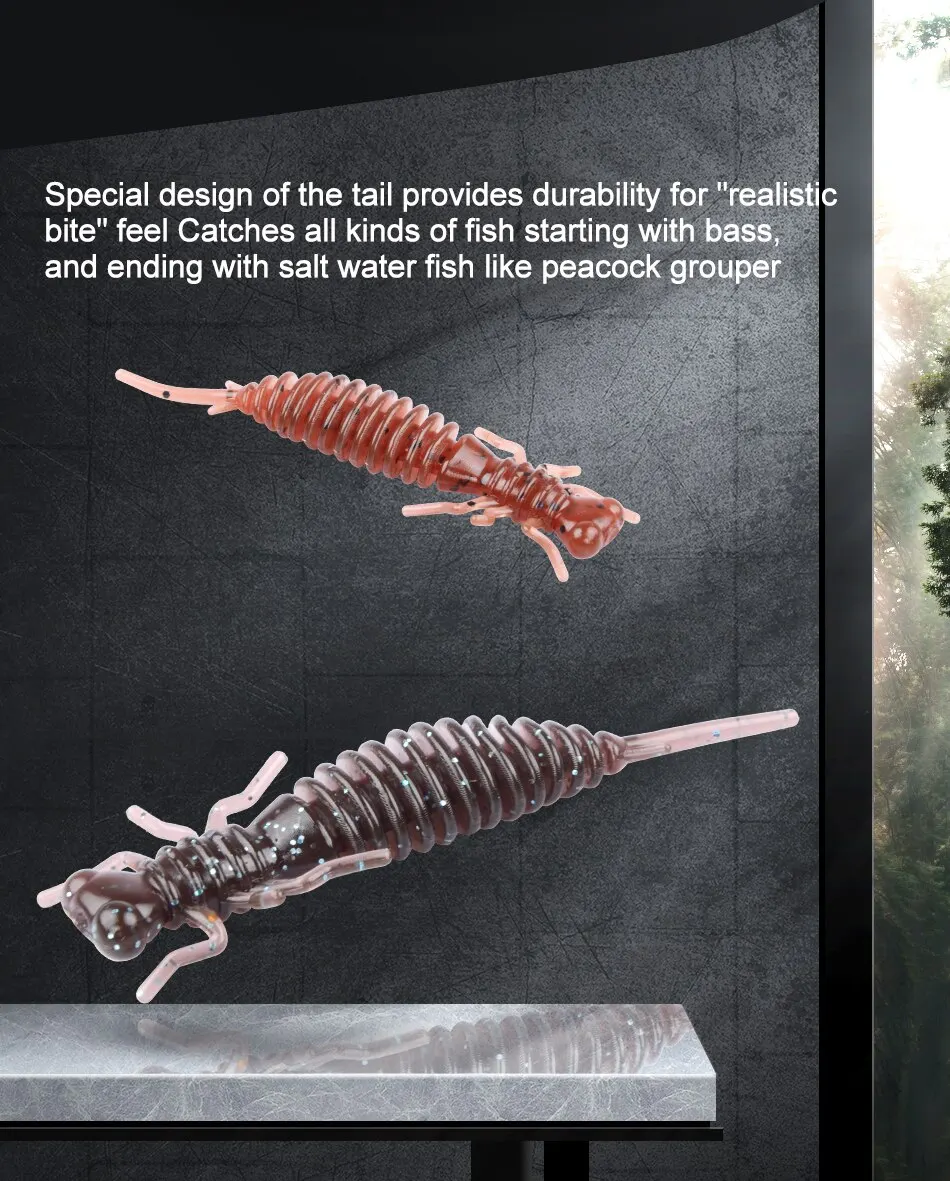
MEREDITH Larva Soft Lures work because they match a real food source and they are built for the exact places predators hunt when they are not chasing baitfish. Dragonfly larvae are part of the aquatic food web and they are also prey for fish, which is why the nymph profile is a proper confidence bait when fish are feeding down in the cover. If you want the biology backed up, the U.S. National Park Service notes dragonfly larvae are part of the aquatic food web and are prey for animals like fish, and the British Dragonfly Society explains the larva (nymph) stage is a key part of the life cycle. That is basically a long way of saying: yes, fish are used to eating these.
On this page, MEREDITH Larva Soft Lures are positioned as an all-season option, and that tracks because “slow bug near cover” is never not relevant. In warm months fish live in weeds and edges. In colder periods they still feed, just slower and closer to the bottom. A nymph imitation stays in the strike zone without looking like it is trying too hard.
How To Fish It
Do not overcomplicate MEREDITH Larva Soft Lures. The whole point is “easy meal”. Here are the money methods.
1) Light jighead crawl (the easiest win)
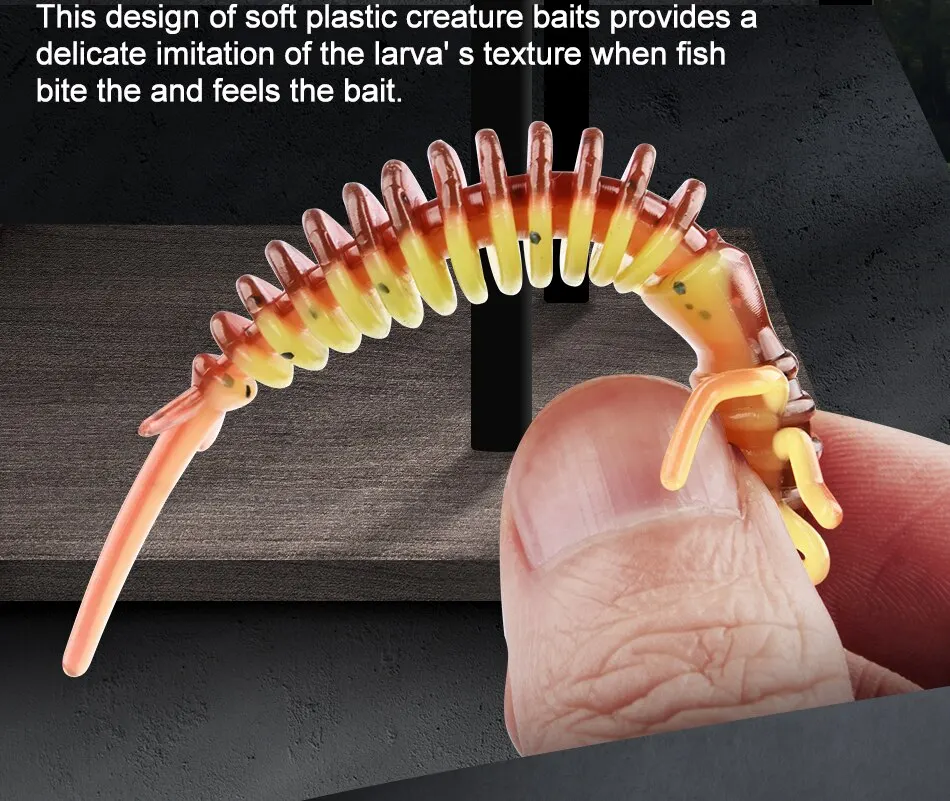
Thread it on a small jighead and fish it like a bottom snack. Cast to the weedline, let it hit bottom, then crawl it with little rod-tip bumps. Pause often. Your job is to look helpless, not athletic. If you need a general rig refresher, Bassmaster have a solid lesson on soft plastics and common rigs that applies perfectly to this style of creature bait.
2) Texas rig for weeds (when the cover is rude)
If the weeds are thick enough to hide a shopping trolley, go weedless. Texas rig MEREDITH Larva Soft Lures on an EWG hook, keep it straight, and pitch it into pockets and lanes. Let it fall, shake it in place, then hop it out. Wired2Fish have a great guide to flipping and pitching baits and why a streamlined presentation gets bites in heavy cover. This is exactly that vibe, just “bug shaped”.
3) “Do nothing” deadstick (yes, really)
Cast it near cover, let it settle, and do almost nothing. Tiny shakes, long pauses. Dragonfly larvae do not sprint. The strikes can be subtle, so watch your line like it owes you money.
4) Slow hop on hard bottom (for perch and trout patrols)
On firmer bottom and cleaner margins, a gentle hop-hop-pause keeps MEREDITH Larva Soft Lures looking alive without leaving the strike zone. This is lethal on perch, and it still gets bass and trout to commit when they are being fussy.
And if you want a quick visual tutorial to copy, search YouTube for flipping and pitching creature baits and watch how little movement it takes to trigger bites. Once you see it, you will stop working your bait like you are stirring paint.
When To Use It
The product page calls MEREDITH Larva Soft Lures an all-season bait, and that is exactly how I would use it: any time fish are relating to weeds, bottom, and margins. It is listed for lake, river, brook, and shallow water, which is basically “everywhere you actually fish”, so you are not boxed in.
- Spring: Fish are cruising shallow and rooting in fresh weed growth. A nymph profile looks normal, not suspicious.
- Summer: Weedlines and shade pockets. Pitch it where fish sit, not where you wish they were.
- Autumn or fall: When fish get moody, slow creature baits keep producing.
- Winter: Slow, bottom, pauses. You will be bored. That is the point.
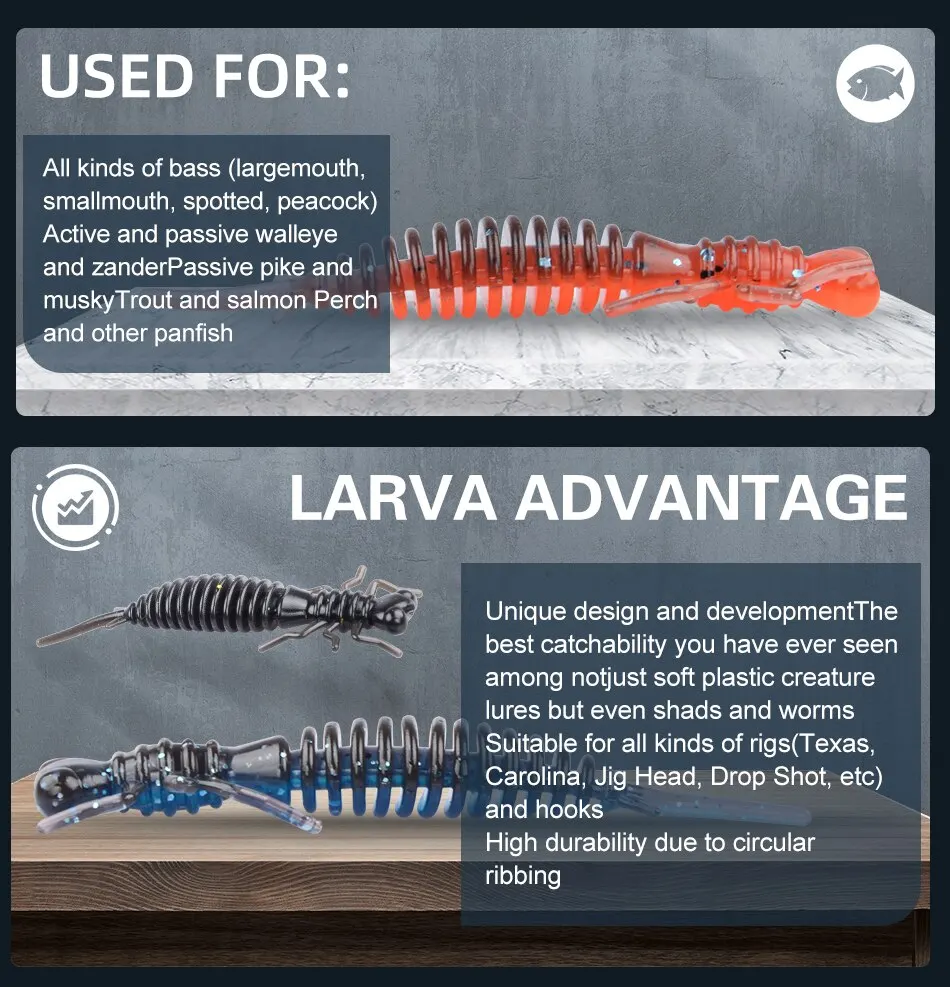
It is also listed for freshwater and saltwater. I would still treat it as a shallow structure bait in salt: edges, rocks, and light current areas where small “critters” get picked off.
Does It Actually Catch Fish?
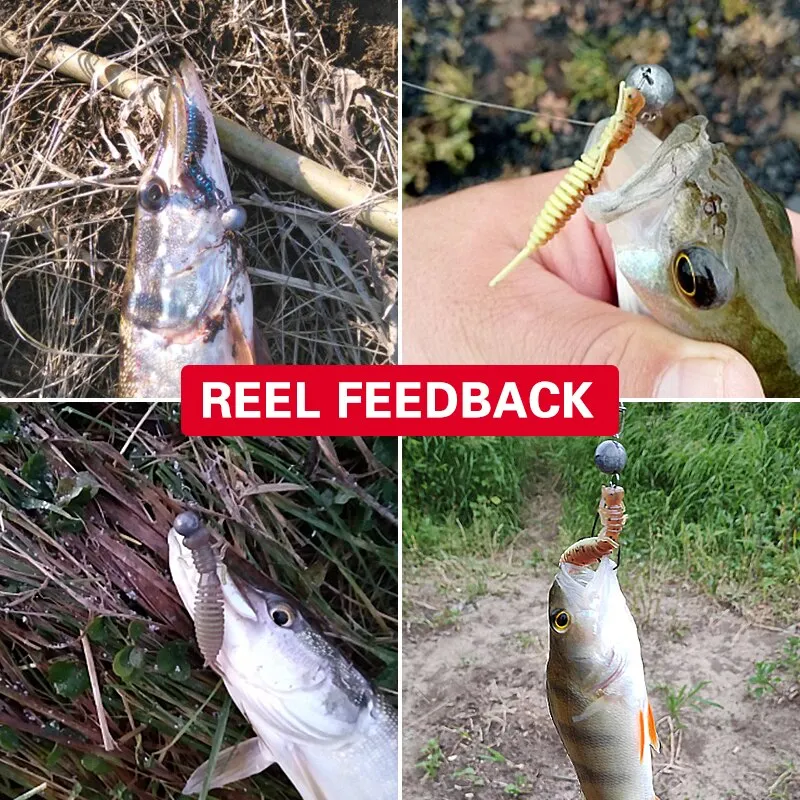
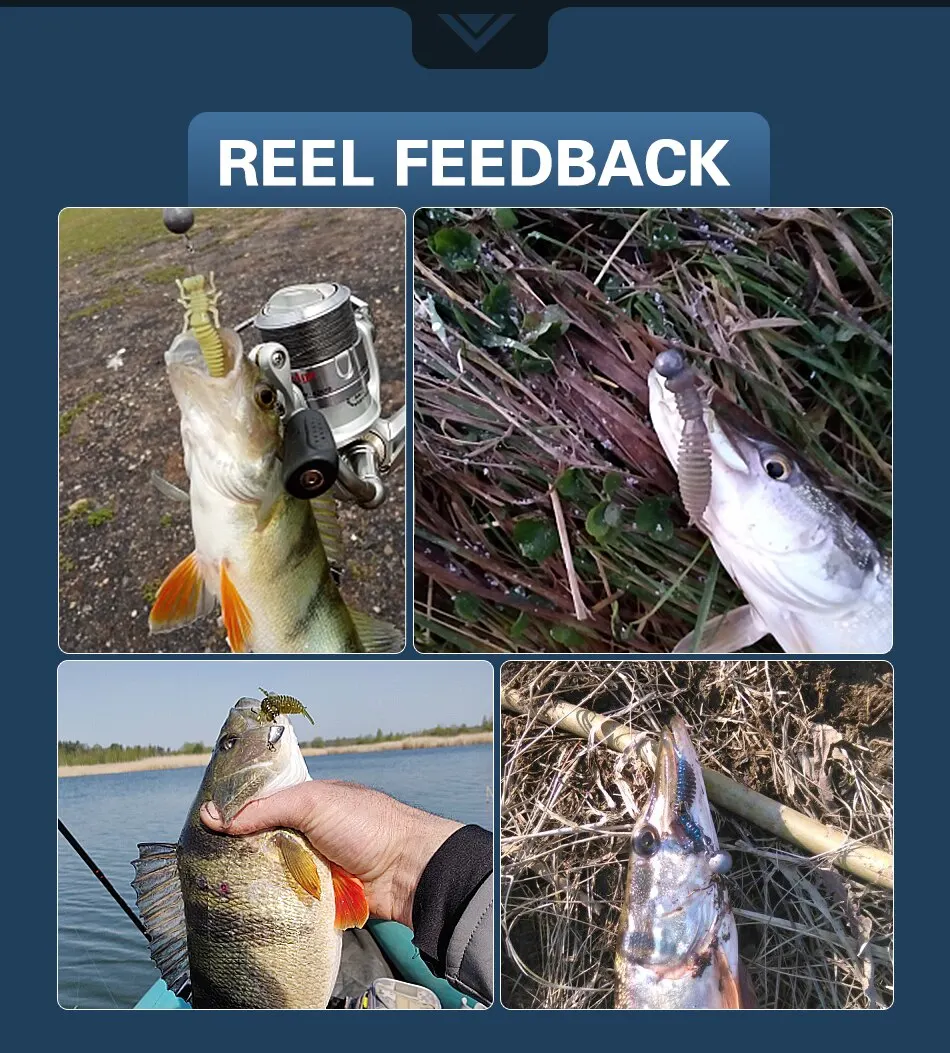
Here is the honest answer: MEREDITH Larva Soft Lures catch fish if you fish them where dragonfly larvae actually live — weeds, lakebed, and shallow margins — and you do not retrieve like a caffeine addict. It is a slow target, so you keep it slow. That is the deal.
And you have some decent on-page confidence signals too: the product is shown as rated 5.00 out of 5 based on 94 customer ratings, with a big order count displayed. That does not guarantee anything, but it does suggest plenty of people have managed to get bit on them without needing a miracle.
If you want “proof by principle”, the National Park Service notes dragonfly larvae are prey for fish, and that is the entire logic behind why a larva bait works. Fish eat what is there. This is there.
Gear Pairing
Match your gear to how you are fishing MEREDITH Larva Soft Lures:
- Finesse jighead work: Light to medium-light spinning rod (about 6 foot 6 to 7 foot), 2000 to 2500 reel, thin braid to a fluorocarbon leader for feel and bite detection.
- Weedless Texas rig: Medium spinning or a medium casting setup if you are pitching into cover, with a tougher leader so you can pull fish out of the salad.
- Hook and weight: Keep it proportional. Do not hang a massive hook in a small bug bait and then wonder why it looks like a coat hanger in the water.
If you are building a sensible soft plastics line-up on your own site, pair MEREDITH Larva Soft Lures with a straight finesse worm for the really tough days, like this Soft Plastic Finesse Worm. And if you want a bigger larva profile for upsizing or heavier cover, compare it with the BEARKING Larva. For general browsing and building a “confidence box”, the Soft Plastic Lures category is the easiest way to round out your options without overthinking it.
Also, when fish are clearly keyed on baitfish instead of bugs, switch to a shad profile like the Supercontinent Shad Soft Lure and keep moving. Match the mood, not your ego.
Specs
- Product name: MEREDITH Larva Soft Lures
- Brand: MEREDITH
- Category: Lure
- Type: Artificial bait
- Model number: JXSC03
- Material: Premium PVC
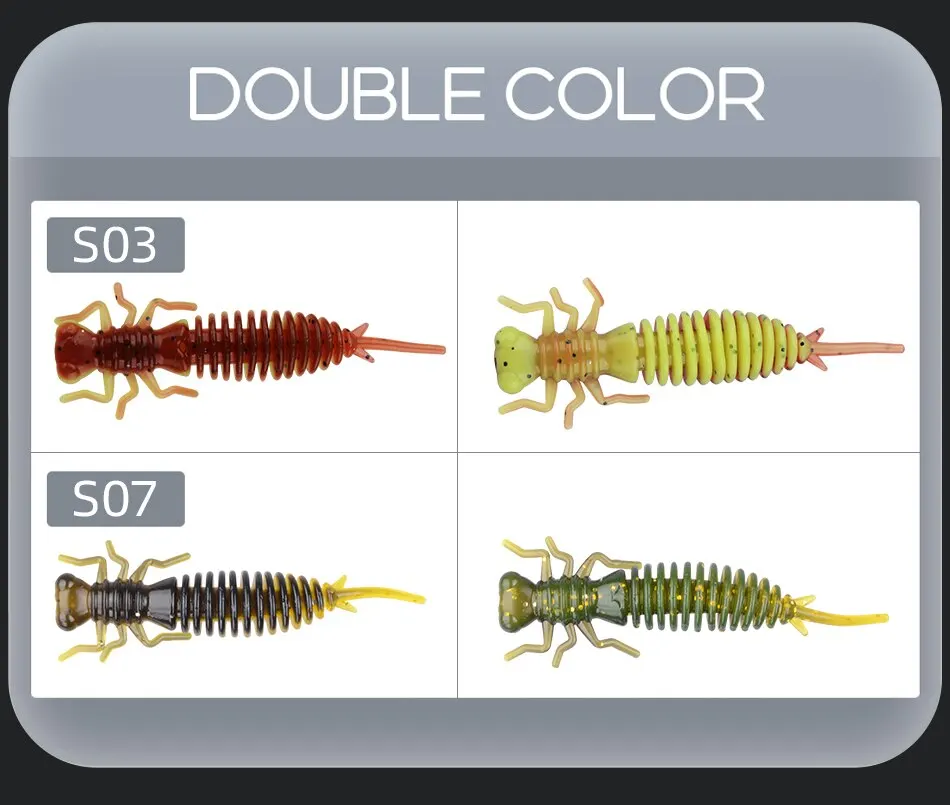
- Colour options: 30 optional types
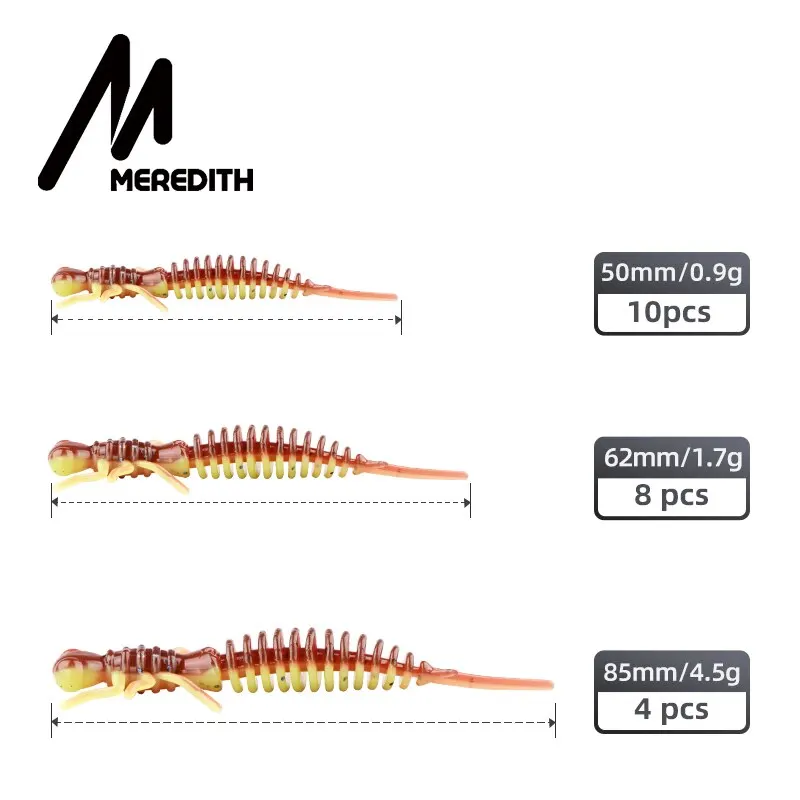
- Lengths: 50mm (1.96 inches), 62mm (2.44 inches), 85mm (3.34 inches)
- Weights (per lure): 0.9g (0.03oz), 1.7g (0.06oz), 4.5g (0.16oz)
- Pack sizes: 50mm 10pcs, 62mm 8pcs, 85mm 4pcs
- Water type: Freshwater and saltwater
- Positions listed: Lake, river, brook, shallow water
- On-page notes: Dragonfly larva imitation, described as a soft plastic creature bait style
FAQ
Which size of MEREDITH Larva Soft Lures should I start with?
Go 62mm first. It is the best middle-ground for perch and bass. Use 50mm when fish are super finicky, and 85mm when you want bigger bites or heavier cover.
Best rig for weeds and snags?
Texas rig, weedless. Keep it straight on the hook so it does not corkscrew and ruin the presentation.
Do MEREDITH Larva Soft Lures work in winter?
Yes. Fish them slow on bottom with long pauses. If you are bored, you are doing it right.
Can I use them in saltwater?
The product listing says freshwater and saltwater. Fish them around shallow structure and edges, and rinse your gear after because salt is a bully.
What if I keep missing bites?
Downsize the hook, slow the retrieve, and watch the line on the pause. Most “misses” are just you being too excited and striking at ghosts.
Final Verdict
MEREDITH Larva Soft Lures are a proper “tough day” saver: realistic prey, slow presentation, and perfect for weedlines and bottom crawling when fast baits are getting ignored. Fish them where bugs live, slow down, and let the fish make the mistake.
If they will not eat this, they are not fussy… they are just being rude.
Real customer reviews