
You know those days when the fish are clearly eating proper baitfish, but all your little crankbaits just look like crisps in the current?
That is exactly where this multi jointed fishing lure earns its place in the box.
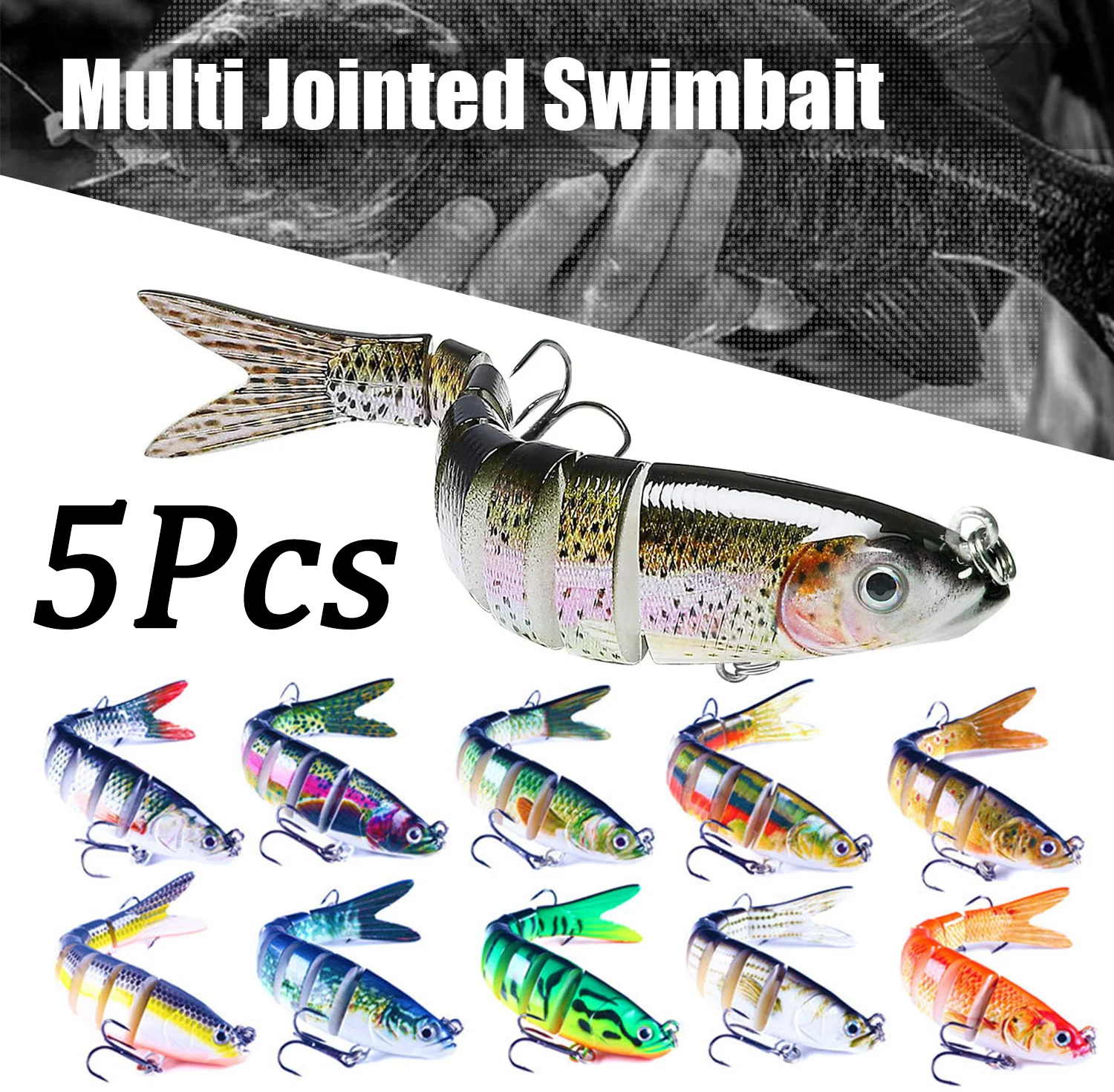
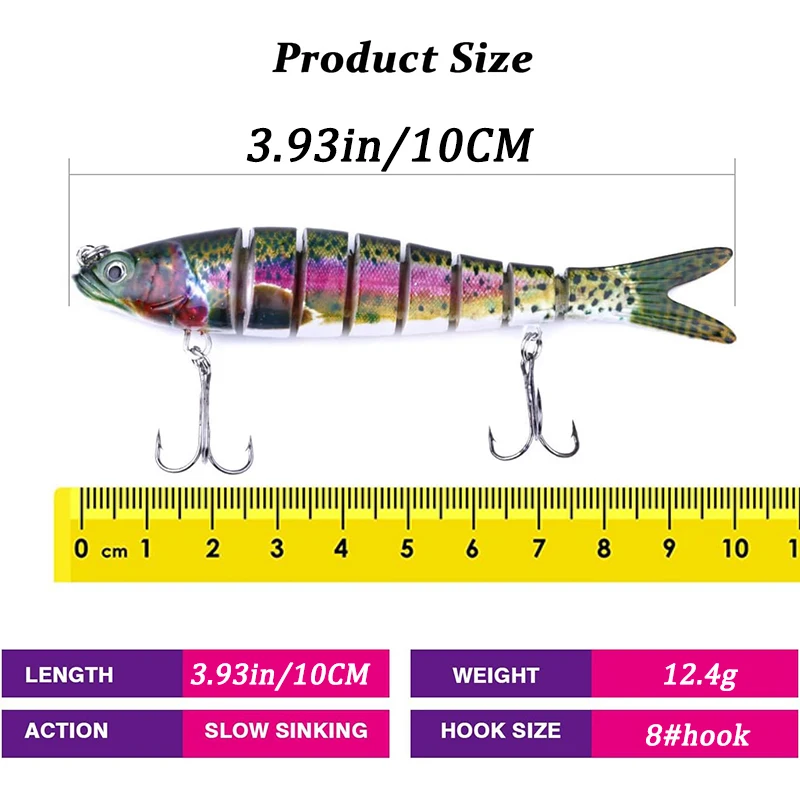
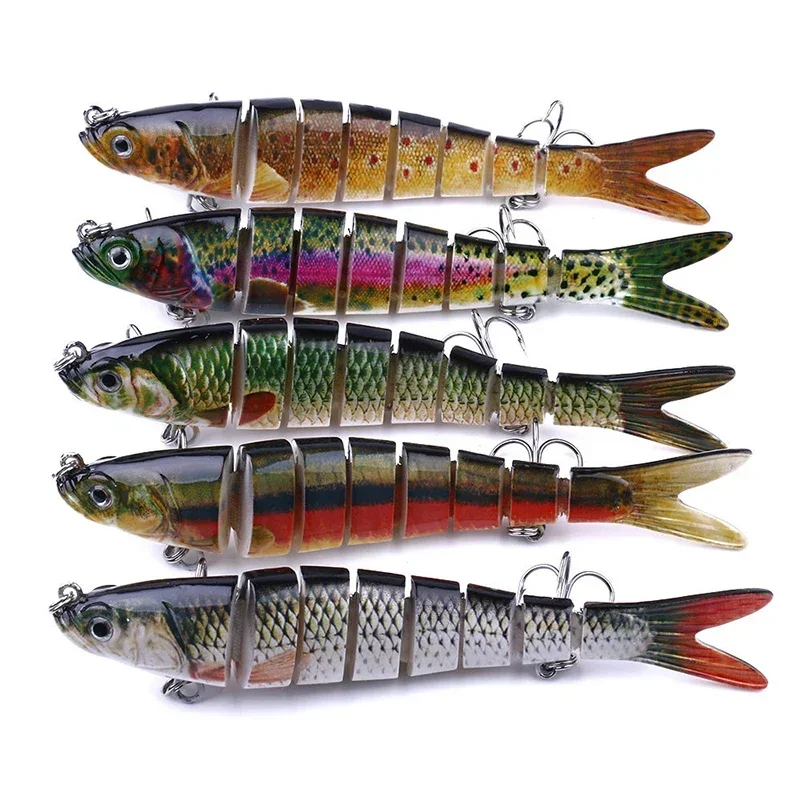
It is a 10 cm, ~12.4 g, slow-sinking, hard-bodied swimbait built around an 8 segment bionic body, with 3D eyes, a pearl-style finish and internal rattles.
In other words: it looks like food, it moves like food, and it sounds like food getting chased.
Available in random colour packs of 1, 3 or 5 lures, this segmented bait is meant to cover everything from stillwaters and canals to rivers and inshore salt.
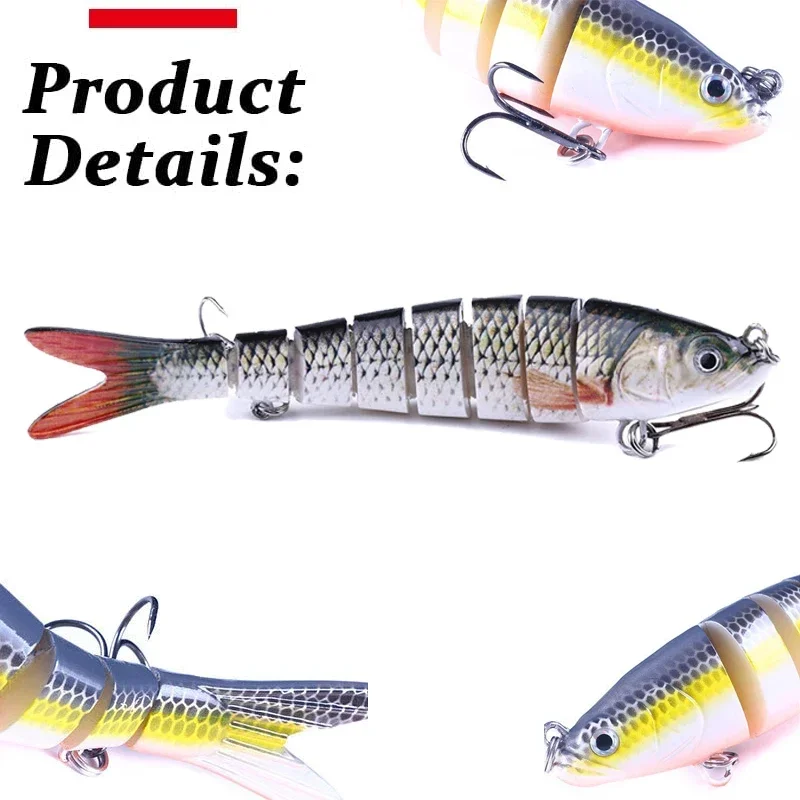
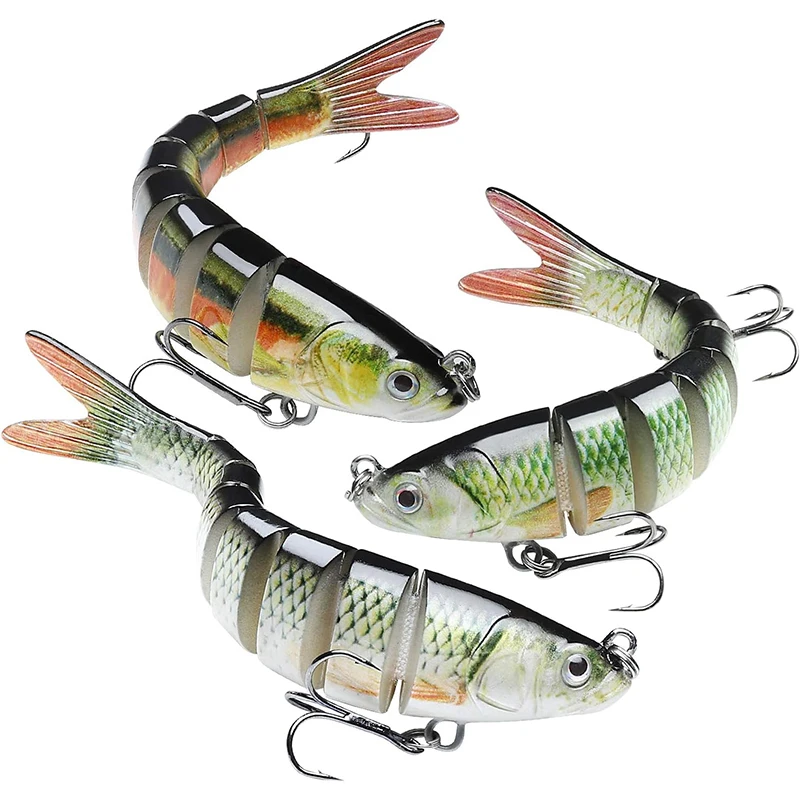
The body is constructed from tough ABS plastic with the segments joined by strong mesh fabric, so the whole lure kicks into a natural S-shaped swim as soon as you wind.
Add in two strong treble hooks, flat split rings and five different colour patterns, and you have a very handy little troublemaker for bass, pike, trout, snook, walleye and assorted freshwater and saltwater thugs.
Why This Lure Works
Under the bonnet, the recipe for this multi jointed fishing lure is simple but clever:
- 8 segmented body – the lure is broken into eight small sections, linked with tough fabric for a smooth, hinged swim.
- Slow-sinking body – at 10 cm and 12.4 g it sinks at a controlled rate, letting you work mid-depth or close to the bottom.
- Internal rattle – built-in steel balls create casting weight and a “bass vibration” knock as it swims.
- 3D fish eyes and pearl powder coating – extra realism when fish are close enough to judge your life choices.
- Two strong treble hooks – ready to grab anything that swings at it.
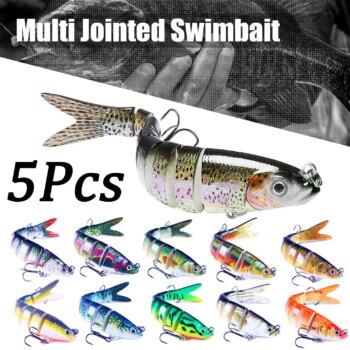
- Five colour options – but sold as random colours in 1, 3 or 5 piece packs, so you end up with a little squad of baitfish.
The big deal with an 8-piece multi jointed fishing lure is how natural it looks at slower speeds.
Instead of simply hinging in the middle, the whole body flexes so it glides, wobbles and tracks like a proper injured baitfish.
Jointed swimbait guides from places like Wired2Fish and Bassmaster point out that this realistic, slow-speed swim is exactly what convinces bigger, lazier predators to finally have a go – especially in clear water where they can really eyeball a lure before committing.
Then there is the sound. The internal rattle knocks away inside the ABS body, giving you that subtle “dinner bell” effect as the lure swims.
When you are fishing slightly coloured water, or around wind-blown banks, that extra vibration helps fish find your lure even when visibility is rubbish.
You are basically offering them a snack that they can see and feel, which is never a bad combination.
If you want to nerd out on why jointed swimmers are so deadly, have a look at this Wired2Fish guide on when and how to fish multi-jointed swimbaits.
It explains exactly why that slow, S-shaped kick from a segmented body convinces bigger bass to finally have a go.
How To Fish It
You do not need a PhD in swimbaits to fish this one. Treat it like a hard swimmer that wants a bit of space and a bit of patience.
1. Slow roll in the strike zone
- Cast your multi jointed fishing lure past the juicy bit – points, weed edges, rock seams, jetty pylons and current breaks.
- Let it sink on a semi-tight line for a couple of seconds so it drops into the right depth band.
- Wind it back at a slow to medium pace, rod tip down, just fast enough to feel it thumping and wiggling.
The trick is not to overdo it. Let the joints do the work.
That S-shaped action looks deadly on a simple slow roll, and you will be surprised how many bites come when you are just being steady and boring.
2. Stop–go “wounded baitfish” retrieve
Because this swimbait is slow-sinking, pauses are absolute murder:
- Wind three to five turns.
- Stop and let the lure glide and sink a foot or so.
- Give the rod a short lift, then go back to slow-rolling.
That little fall-then-kick move looks like a baitfish that has just realised it is out of ideas.
Predators are suckers for something that looks like it is about to die with minimal effort on their part, and a multi jointed fishing lure does that brilliantly.
3. Around grass, timber and edges
Despite the trebles, you can fish this bait surprisingly tight to cover if you are sensible:
- Work it along the outside edge of weedbeds instead of burying it in the jungle.
- Run it past standing timber, pontoons and boats, not straight through them.
- On canals and narrow rivers, cast parallel to the bank and just slow-roll it back like a lost baitfish.
If you do clip a bit of grass, just pop the rod tip and keep winding.
Half the time the lure clears itself; the other half you have just made the perfect “wounded” wobble anyway.
The whole “count it down and crawl it back” idea is bang on with this sort of bait too. Bassmaster talk about the same thing in their swimbaits and the drop swim article – let the lure fall, wind it slowly until it ticks something, then pause and let it fall again.
Exactly what this multi jointed fishing lure is built for.
When To Use It
This is not a tiny numbers bait. This is a multi jointed fishing lure with a proper meal profile, so it shines when:
- Fish are eating decent-sized baitfish rather than micro fry.
- You have at least a metre or two of water – dams, canals, bigger ponds, rivers and inshore salt.
- There is room to cast and let the lure swim – points, breakwalls, rocky banks and harbour edges.
- You are happy to trade “lots of small ones” for “fewer but better ones”.
Season-wise, slow-sinking jointed swimbaits do work all year, but they are especially good:
- Spring and autumn – when predators are following bait along edges and structure lines.
- In summer – around shade, weedlines and current where big fish ambush bigger meals.
- In winter – when a slow, believable swimmer can tempt a sulky lump that will not move for a tiny finesse rig.
Freshwater, saltwater or a bit of both – this lure is rated for bass, pike, muskie, trout, walleye, snook, salmon and more, plus the slightly more exotic customers on the product page like pale chub, yellowcheck carp, Chinese perch and topmouth culter.
If it eats fish, it is a fair target.
Does It Actually Catch Fish?
Short answer: yes – as long as you treat it like a tool, not a magic spell.
Swimbaits and jointed hard lures have earned their place in serious bass and predator fishing for a reason.
Big-name sources bang on about how realistic swimmers can upgrade the average size of fish you hook, and endless tournament recaps feature a swimbait being responsible for the “kicker” fish of the day.
At the same time, plenty of anglers on places like Reddit will happily remind you that an expensive swimbait is still just a lure – timing, location and confidence matter more than price tag.
This particular multi jointed fishing lure sits comfortably in the “does the job” camp:
- Believable baitfish profile at a very usable size.
- Slow-sinking action that you can control with countdown and retrieve speed.
- Segmented body that looks alive even when you are barely turning the handle.
- Two strong trebles, so when something good finally swings, you are actually connected.
Fish it around real bait, keep it in the strike zone, and use sensible line and drag settings.
Do that, and it will absolutely put proper fish on the deck.
Gear Pairing
You do not need a dedicated swimbait broomstick for this lure, but a sensible, all-round setup makes life easier:
- Rod: Around 7 ft medium or medium–heavy spinning or baitcasting rod with a fast tip – anything comfortable with 10–20 g lures.
- Line: 15–30 lb braid with a fluorocarbon or mono leader gives you casting distance and sensitivity.
- Leader: Step up to a slightly heavier leader if you are around rocks, timber or toothy fish.
If you want to build a little system around this multi jointed fishing lure, there are some easy companions right on BassFishingTips.US:
- Use this bait as your “one big meal” swimmer, then add the 3-Piece 8 Segment Fishing Lure Set when you want a few more colour options and backups.
- For windy days or faster current, pair it with the FSTK Heavy Sinking Minnow Lure – that plug bombs a cast and grinds deeper when you need extra reach.
- When fish want something softer and subtler, keep a pack ofMeredith Paddle Tail Swimbaits ready to go.
- Spool up with FTK PE Braided Wire Fishing Line for better feel and long casts.
- And if you want a full breakdown of rods, reels and terminal tackle, have a read through this bass fishing setup guide before you head out.
Specs
- Type: Jointed bait / swimbait (hard bait).
- Body: ABS plastic, 8 segmented sections with mesh fabric joints.
- Length: 10 cm (per item specifics).
- Weight: Approx. 12.4 g.
- Buoyancy: Slow-sinking.
- Hooks: 2 x strong treble hooks.
- Rings: Flat split rings.
- Eyes: 3D fish eyes.
- Finish: Pearl powder-style coating with lifelike patterns.
- Colours: 5 different colours (supplied at random).
- Packs: Random colour 1 pc, 3 pcs or 5 pcs.
- Material: Plastic (ABS).
- Style: Hard bait, swimbait & joint bait category.
- Water: Freshwater and saltwater.
- Target fish (listed): Bass, pike, muskie, trout, walleye, snook, salmon, pale chub, yellowcheck carp, Chinese perch, topmouth culter and more.
FAQ – Multi jointed fishing lure questions answered
Do I need special “big swimbait” tackle for this lure?
No. This is a mid-sized, 10 cm multi jointed fishing lure, not a massive glide bait.
If your rod comfortably throws medium crankbaits and small spoons, it will handle this lure just fine.
A 7 ft medium or medium–heavy rod with 15–30 lb braid or 10–15 lb mono/fluoro is a nice sweet spot.
How deep does this multi jointed fishing lure run?
The listing only specifies that it is a slow-sinking bait, not a precise running depth.
In practice, you control depth by counting it down and adjusting retrieve speed.
Count longer and slow your wind for deeper water, or start winding sooner to keep it higher in the column.
Will the random colours actually matter?
Colour always matters a bit, but with a jointed swimbait the action is usually more important.
The random packs give you a small selection of patterns so you can rotate between brighter and more natural looks until the fish tell you what they are in the mood for.
Is it really OK for both fresh and salt water?
Yes – the product details specifically mention both freshwater and saltwater predators.
As with any hard bait, just rinse your lure, hooks and split rings in fresh water after a salty session, and keep an eye on the trebles so they stay sharp and rust-free.
What kind of retrieve usually gets the most bites?
A steady slow roll with the odd pause is the most reliable starting point.
The segments give you a lot of movement even at low speed, so you do not need to burn it.
If you are getting follows but no hits, add short pauses and small rod lifts to make it look like a wounded baitfish trying – and failing – to get away.
Final Verdict
If you want to dip into the world of jointed swimmers without selling organs, this multi jointed fishing lure is a cracking place to start.
You get a realistic 10 cm slow-sinking baitfish profile, a proper 8-segment body that swims beautifully at normal speeds, and hardware that is ready to fish the moment it lands in your hand.
Fish it in dams, canals, rivers or off the saltwater rocks; point it at anything that eats baitfish; and give it the slower, more deliberate retrieve it deserves.
It will not magically fix bad spots or terrible timing, but when you put it in front of the right fish, it has everything it needs to get absolutely hammered.
Send this segmented troublemaker out past the crowd, start winding, and hang on – the hits feel like you have just hooked a passing train.



Real customer reviews